
The Shadowed Valor Memorial Museum
Location: University of the Philippines Diliman, Quezon City
Designed in: 1st Semester | A.Y. 2024-2025
Softwares Used: Sketchup, Enscape, Photoshop
"Architecture can do more than shelter history—it can make us walk through it, confront it, and remember it."
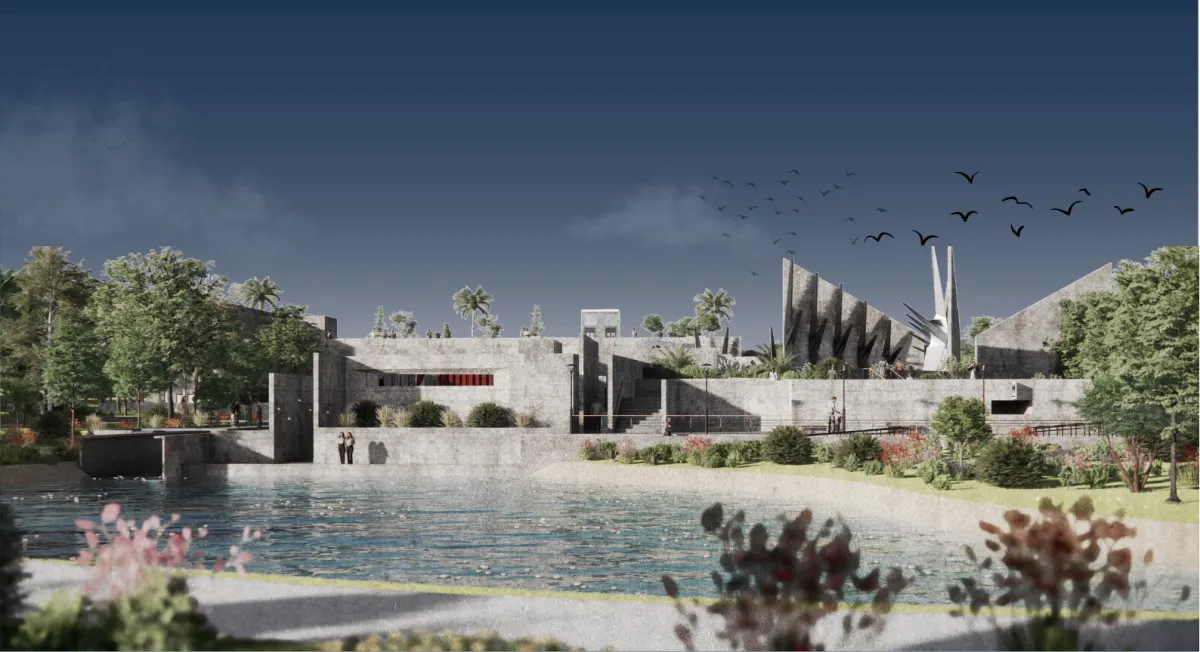
The Shadowed Valor Memorial Museum is based of the concept of the injustices, atrocities, war crimes and dehumanzation of and towards Filipinos by the Japanese towards Filipinos during their occupancy here in the country during World War 2. This freedom memorial museum aims to shine light into the shady past that Japan so hardly tries to cover-up their crimes towards humanity, towards Filipinos. The museum follows the concept of being “Dehumanized” creating spaces that feel desolate and fragmented to reality and the standards we are used to. With the goal of making the visitors feel uncomfortable in certain areas, purposefully confusing them and letting them explore the chaos, creating a controlled hostile environment in which the visitors get to immerse themselves with the round-park same emotions Filipinos felt during this specific time period, and giving them choices to make that affects how they will experience the space.
For years Japan has tried to keep their war crimes in the shadows and make the world forget about them, to the point where they are even feeding their modern generation lies of their history and past. While those that have experienced the event had spent their lives fighting the traumas they caused. Many atrocities were committed against Filipinos from torture, executions forced labor, sexual slavery of comfort women, etc. These injustices and war crimes committed by the Japanese had sought to dehumanize us Filipinos treating and seeing us as inferior to them thus not many are not treated as humans, in turn also turning themselves unhuman but committing such atrocities. Many Filipino women were subjected to sexual injustices like sexual assault and rapes, forced labor (Romusha), Massacres, suppression of freedom of speech, manipulation and coercing Filipinos to fight against their own blood. The injustice continues on until the modern age, after the war Japan only compensated us $550 million of that, a small fraction of what we asked and needed which was $8 Billion Dollars. The war brought upon to us by Japan caused massive damages in our economy and infrastructure. Currently in the Philippines there are alot of monuments dedicated to the Spanish era of our History but seldomly do we find ones that commemorate and educate people of the short but dark period of the Philippines during World War 2 With this freedom memorial museum, we can shed light into the dark past that Japan so-tries to hide in the shadows.
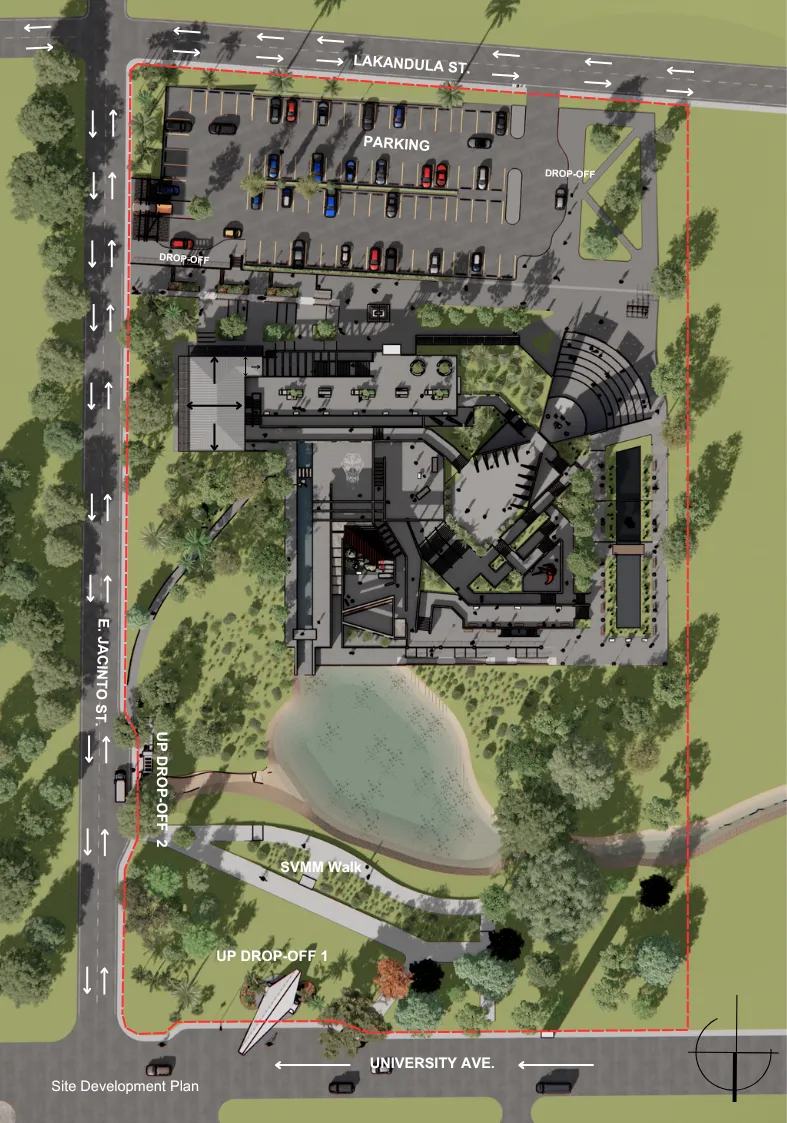
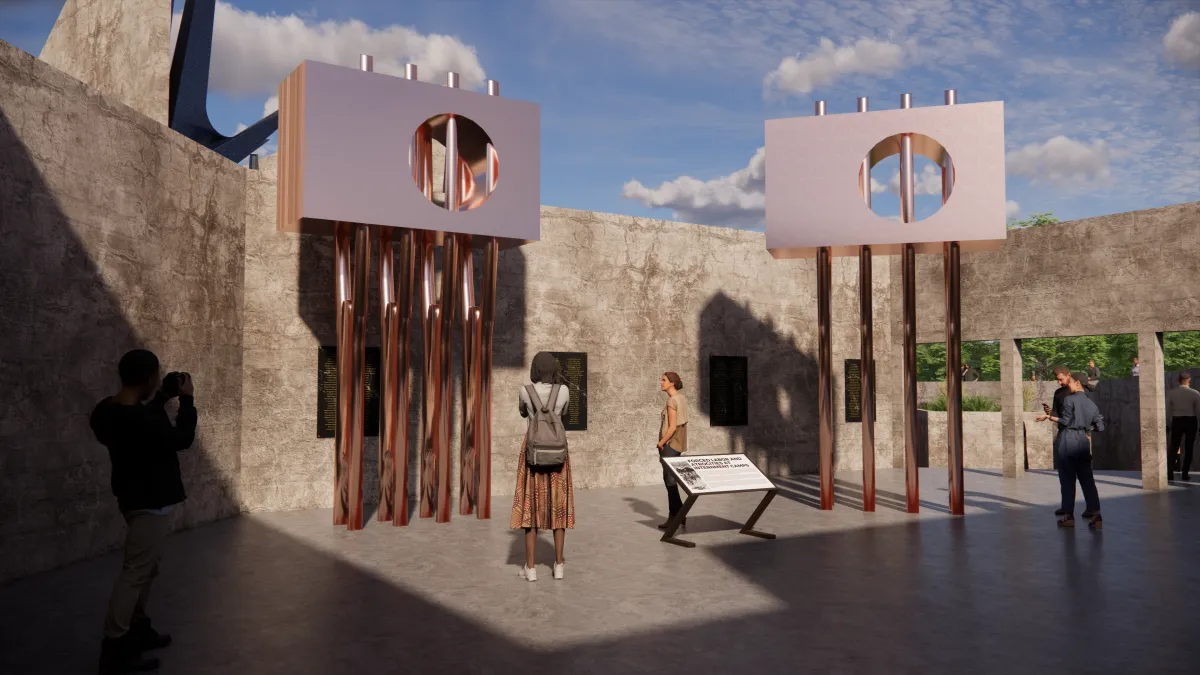
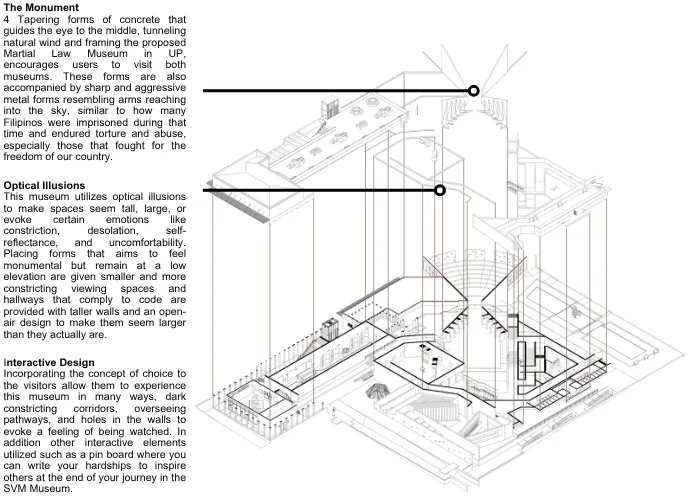
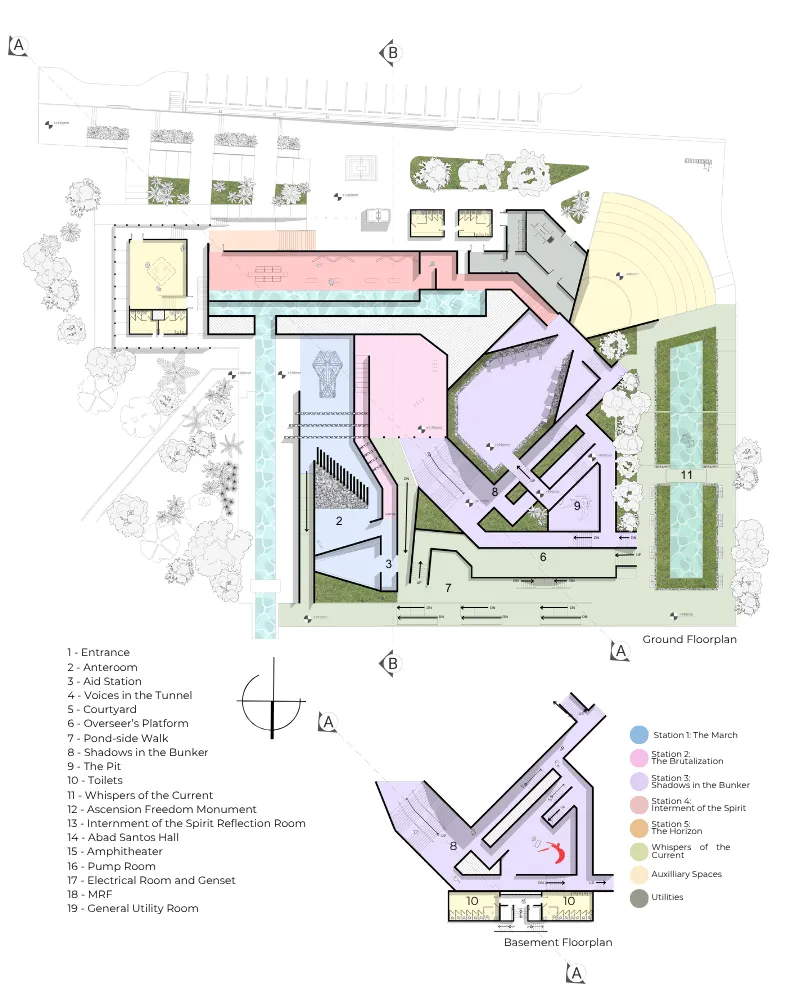
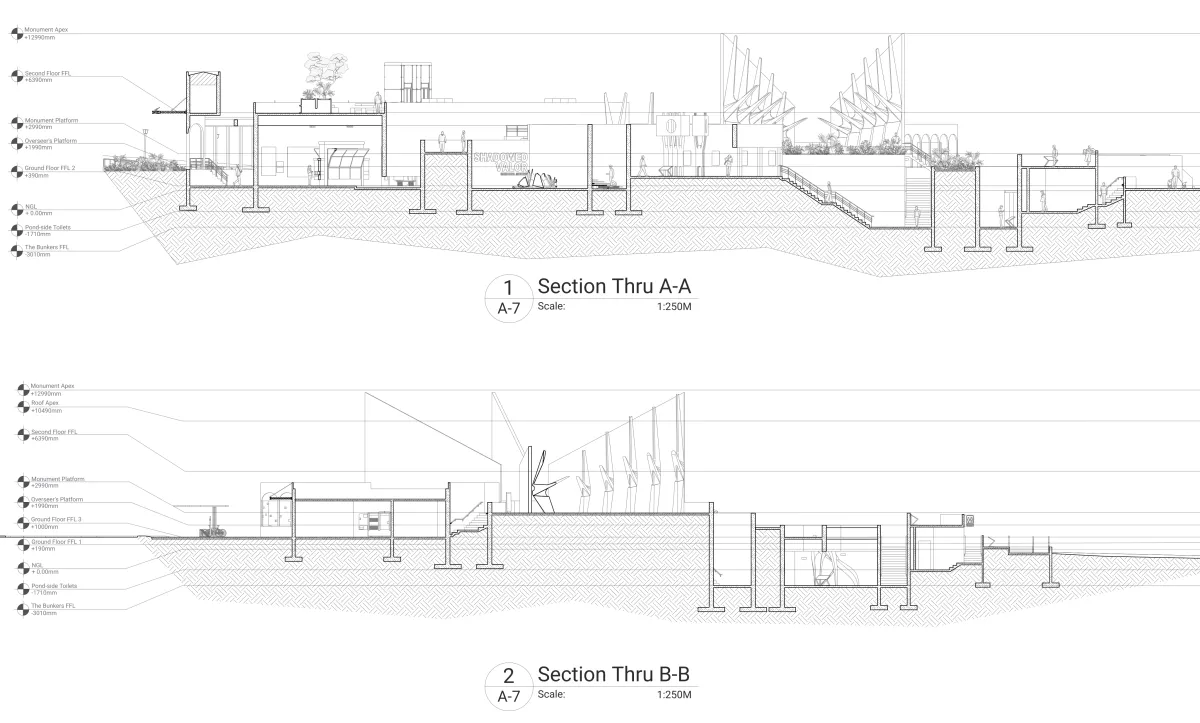
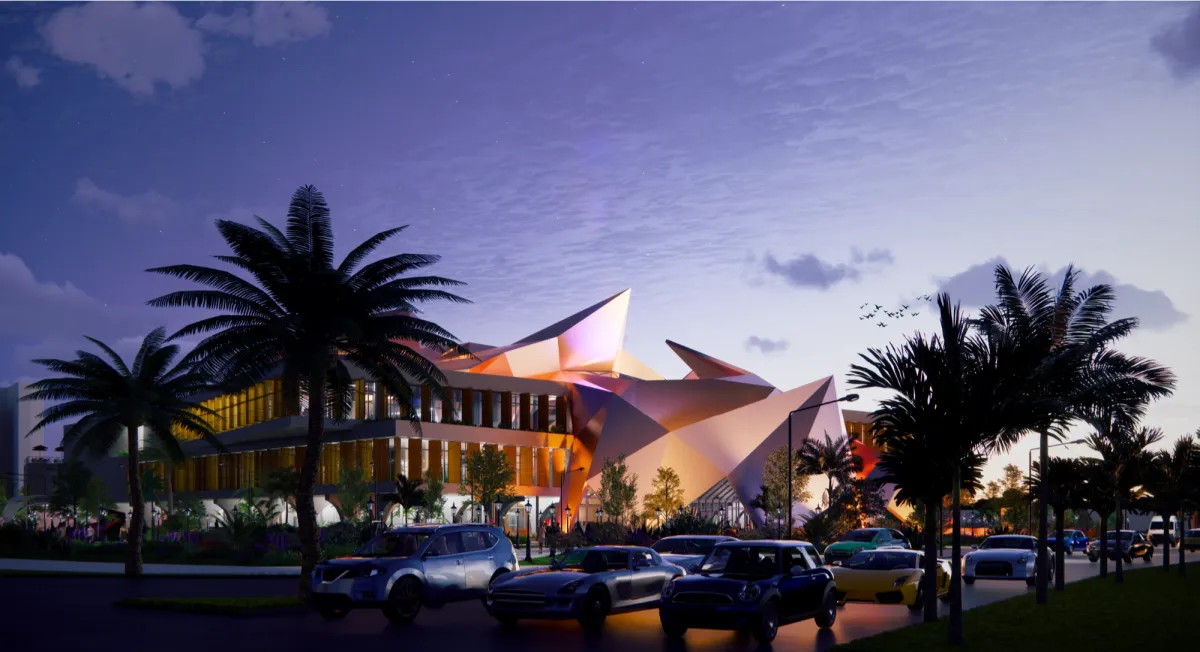
The Museum is composed of 5 main experiential sections in which users have a wide variety of ways to experience the museum, allowing for repeatability and for it not getting stale of visitors fast. Moreover will be discussed on the floorplans sheet. The Shadowed Valor Museum aspires to challenge traditional notions of monumental structures, through the use of more intimate and low to the ground scale and elevations. Keeping the profile of the structure low also helps in the provision of University of the Philippines where the site is located that the road leading to the Oblation is to not be disrupted, any protruding elements such as forms in monumental scales disrupts said sightline. In order to bring attention to the museum while also maintaining the sightlines of oblation on the main road, strategic placement of vegetation allows for views of the structure, from pre-existing drop-off points.
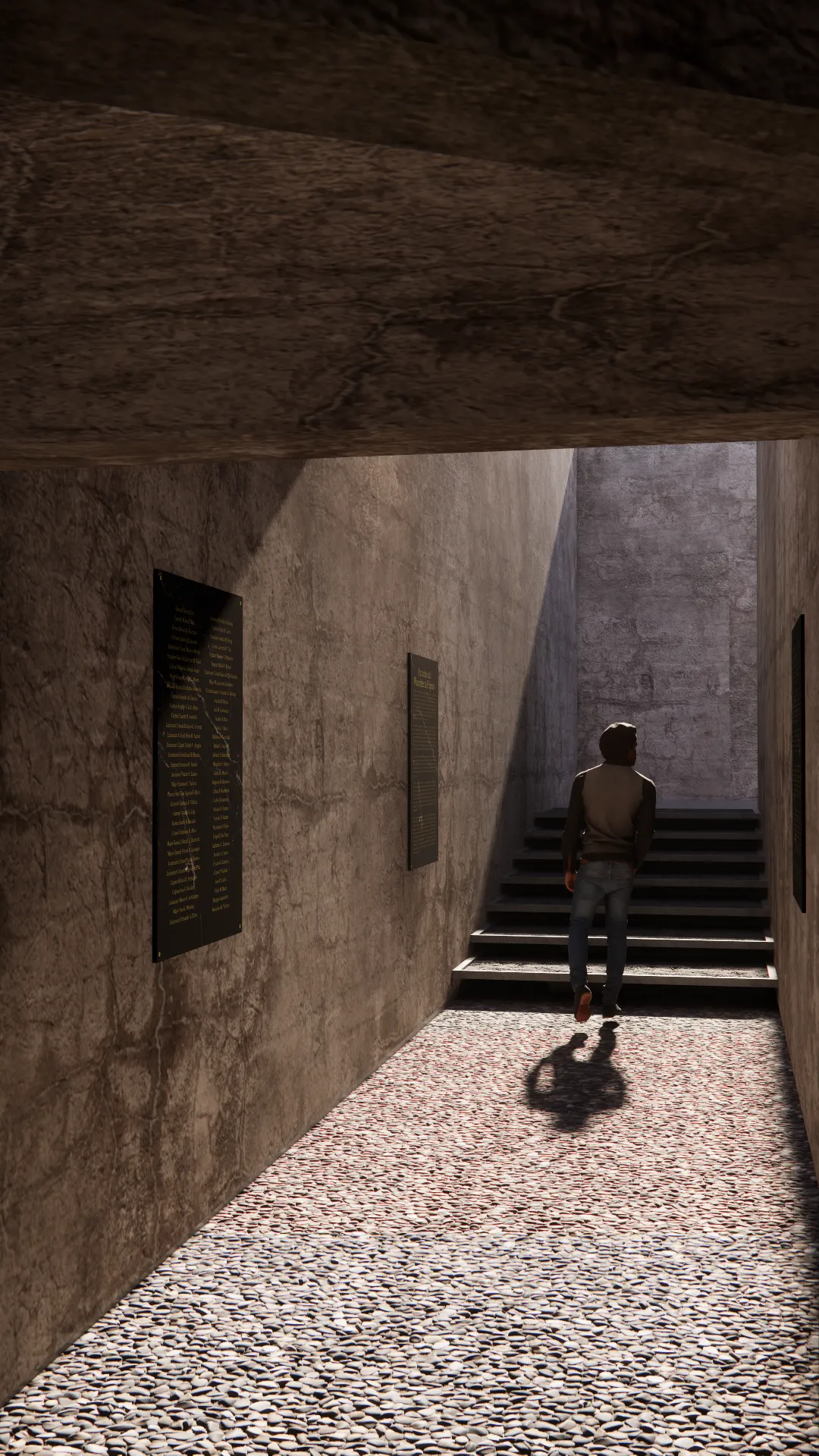
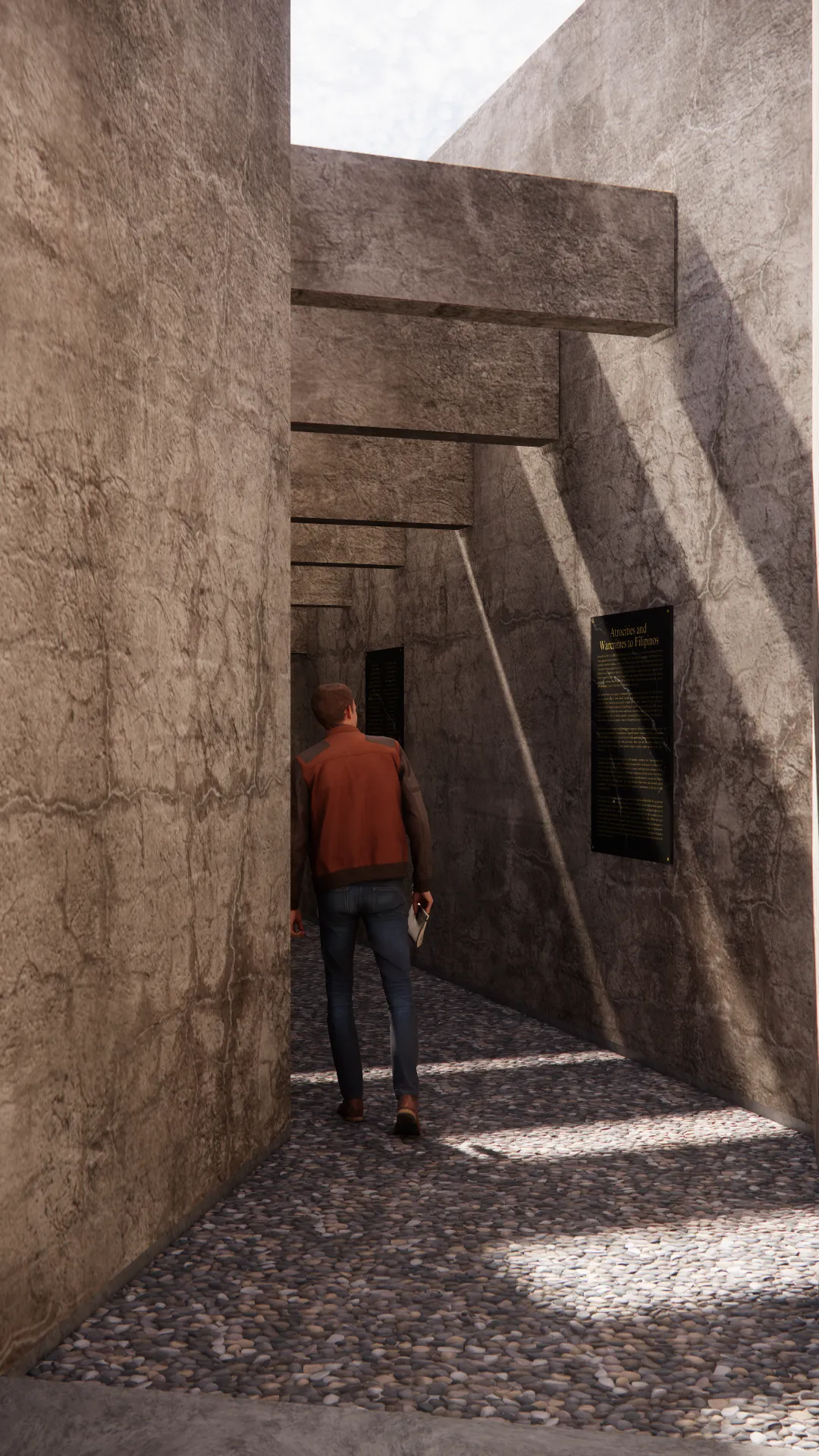
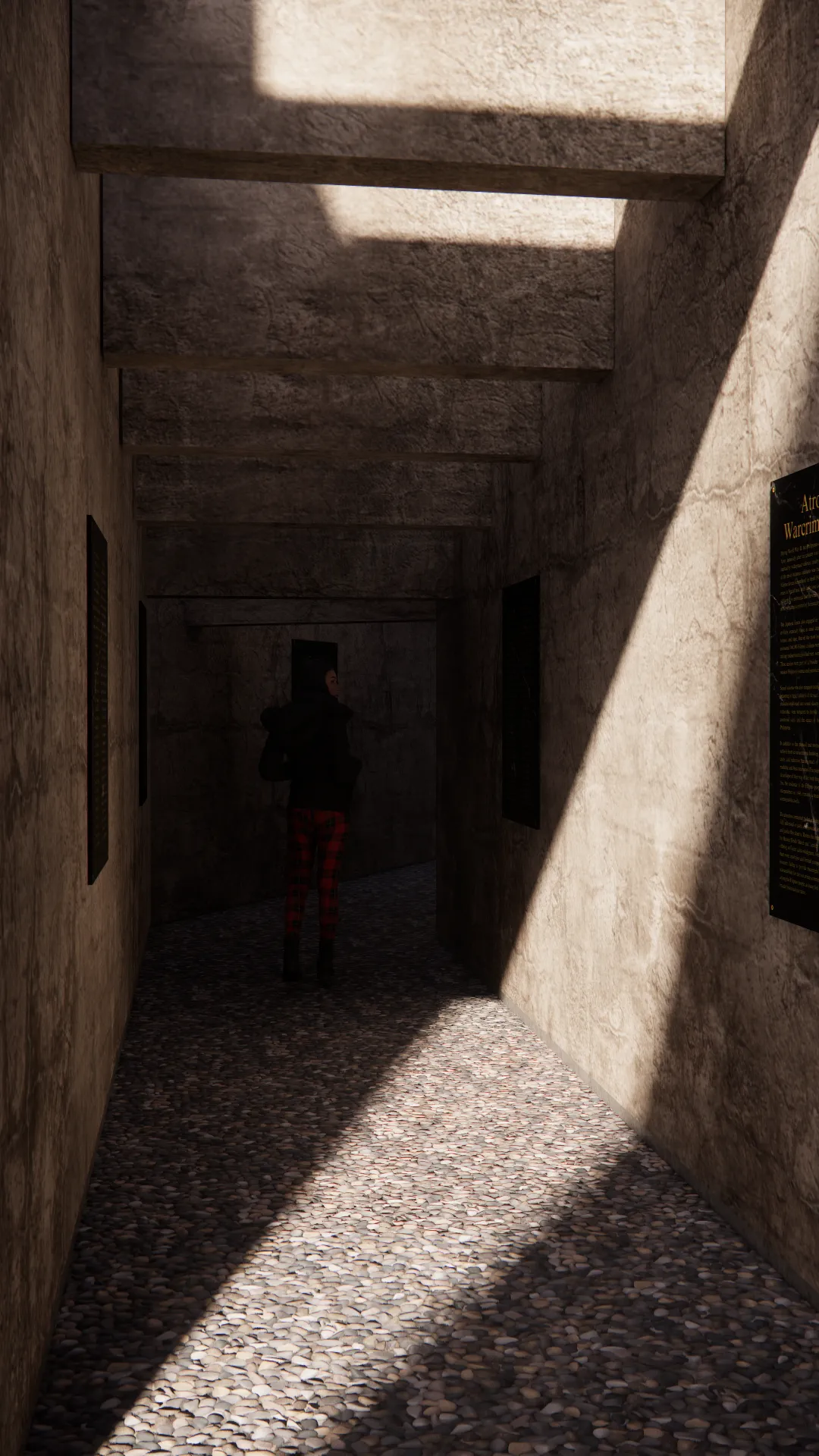
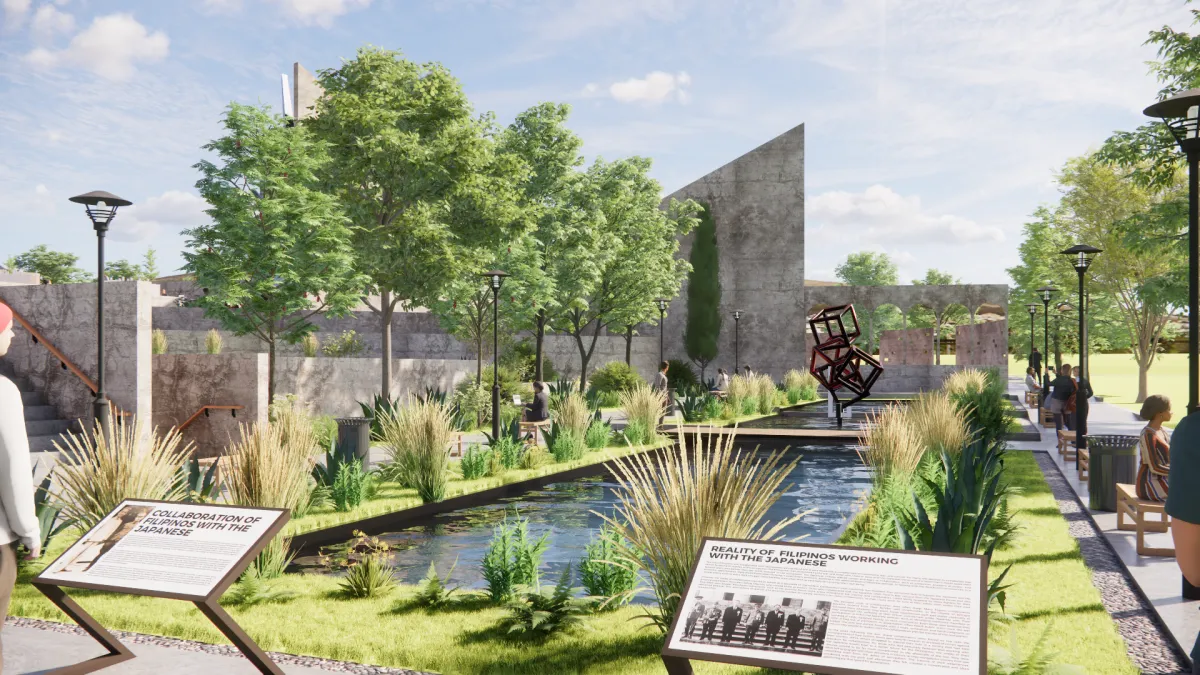
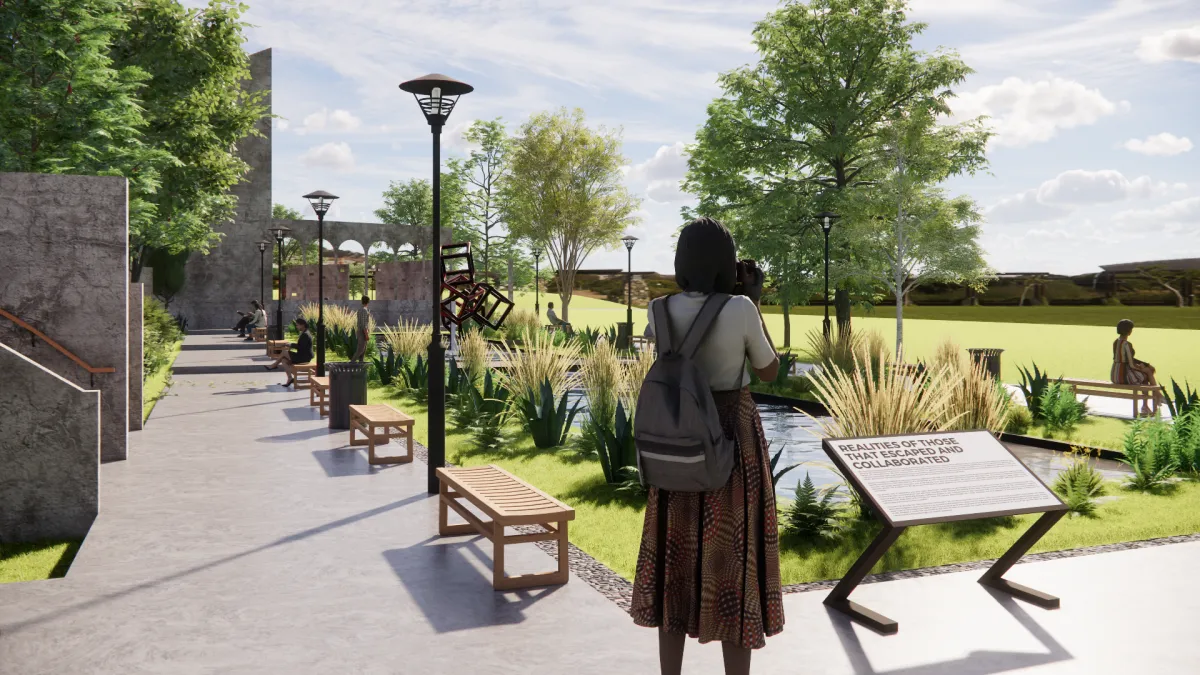
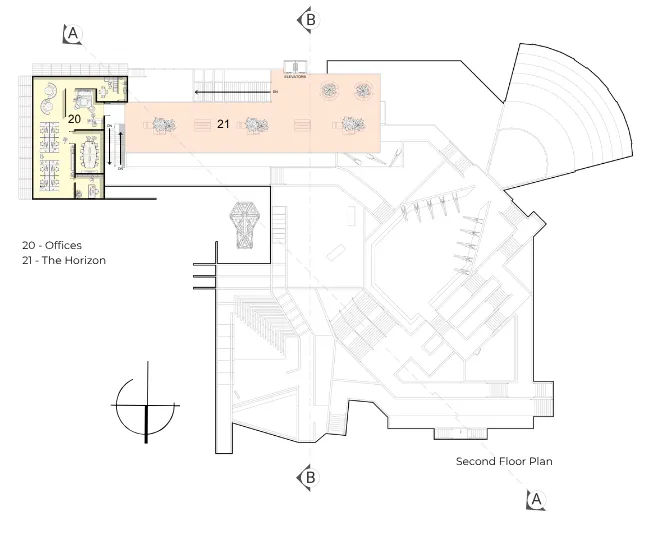
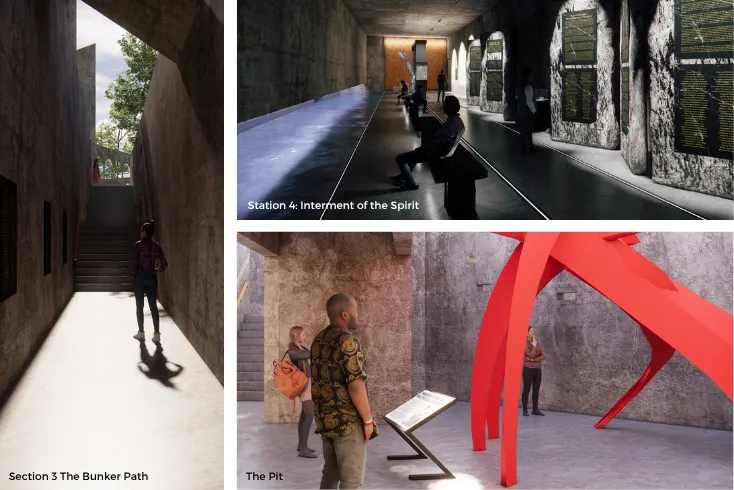
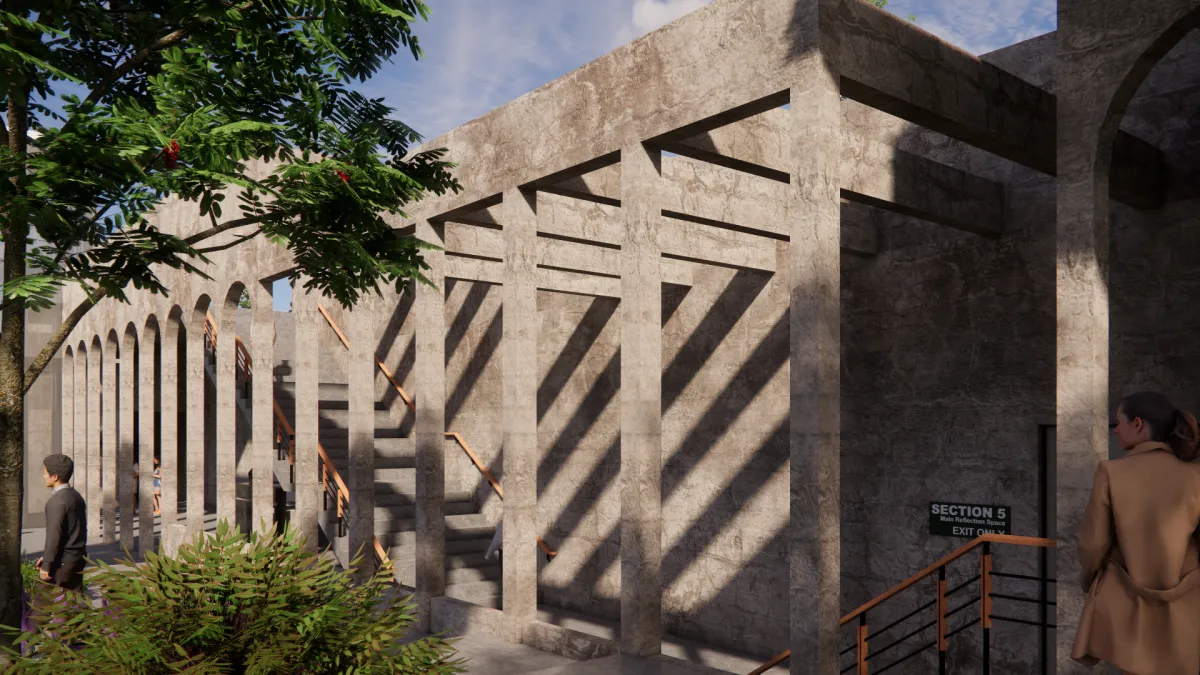
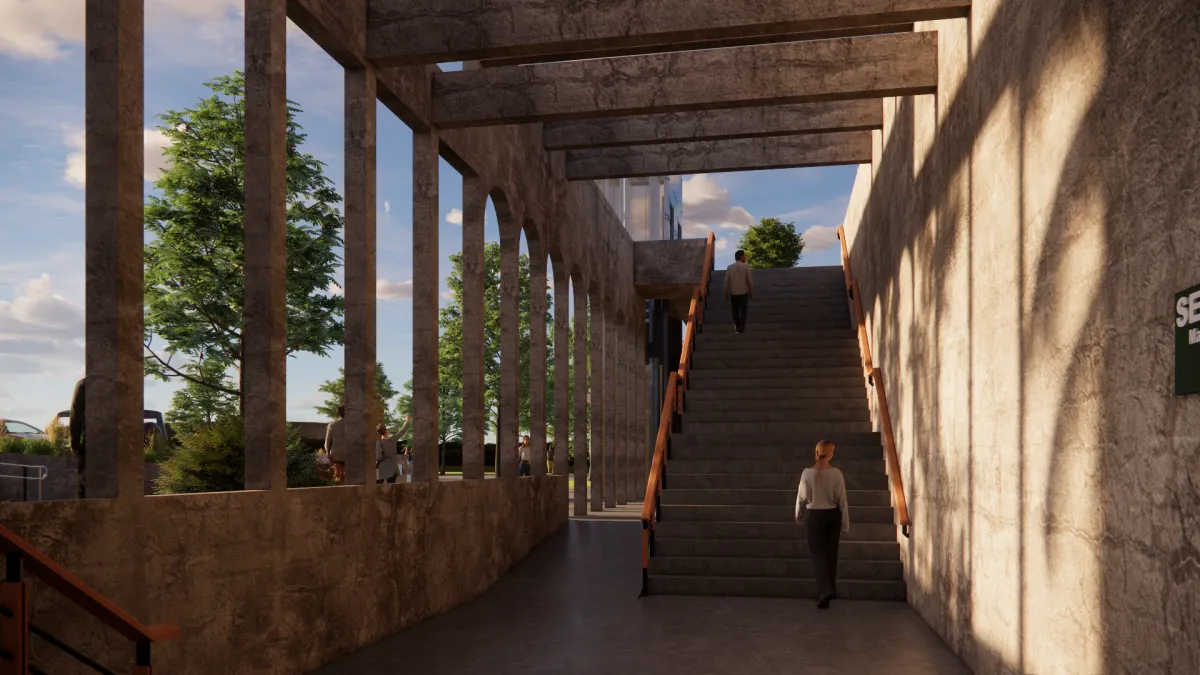
At the end of the Museum you are given the choice to go upstairs which is section 5 where you can learn about the implications of the Japanese Occupation on our present time and the future. This also overlooks over the whole museum symbolizing us looking over the past and how it affects us but also looking towards the horizon, symbolizing hope and for a better future.
Section 5 is also the only Space in which there are seats where you can enjoy the view as this is where humanity is aimed to be restored after the war, seeking for justice. This space is the easily accessible to the public and serves as the main public space of the Museum where they can relax and have picnics but also be educated on the past and can serve as a good introduction to the topic.
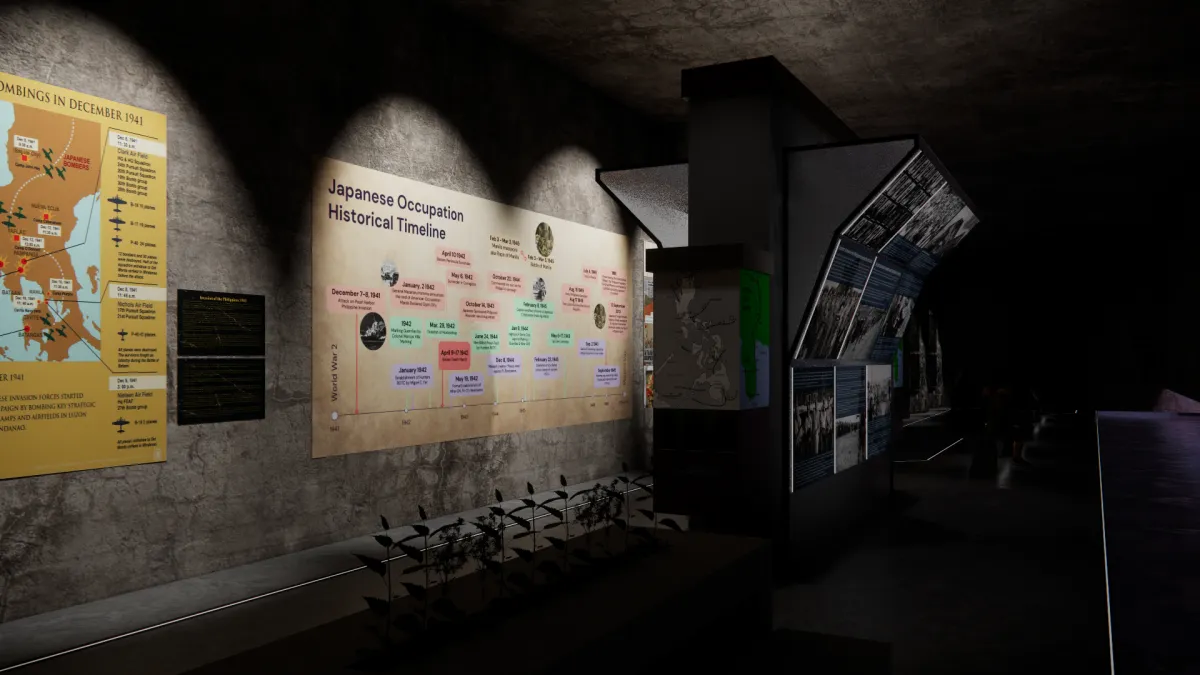
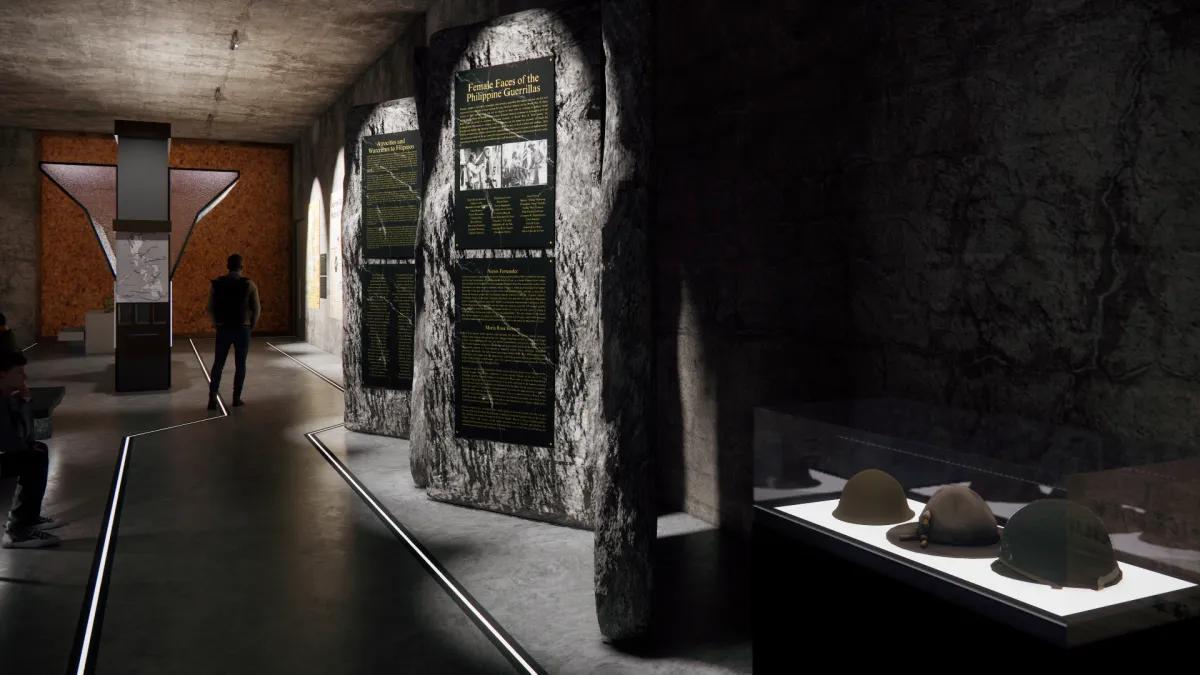
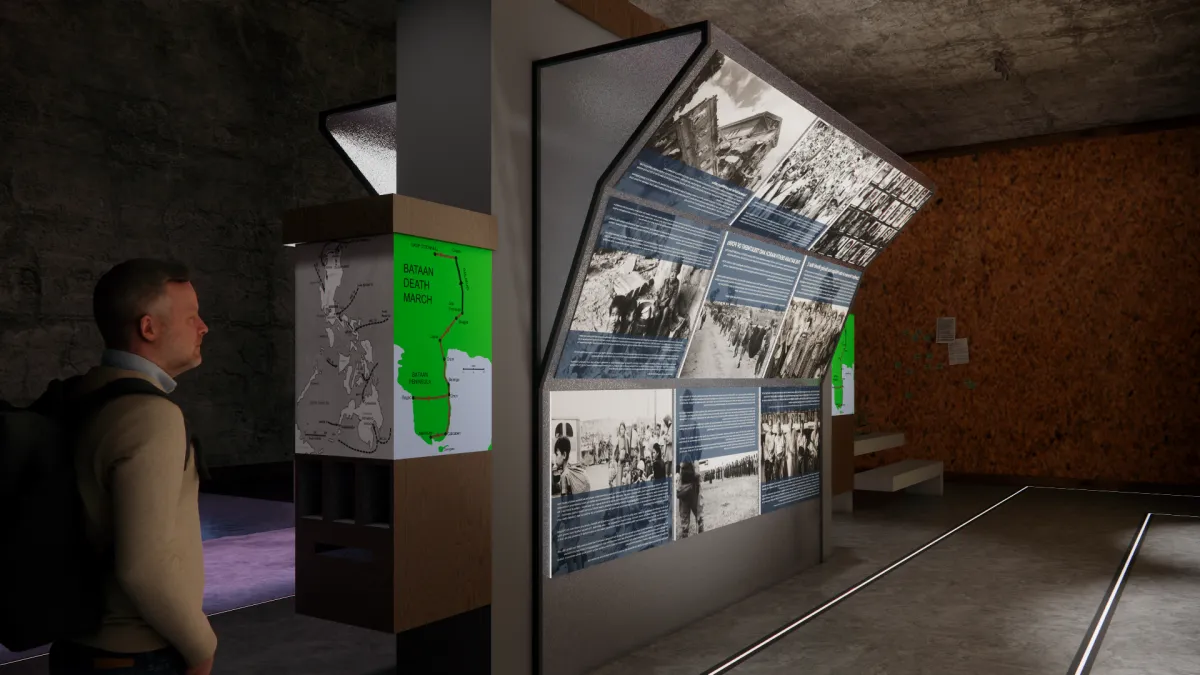
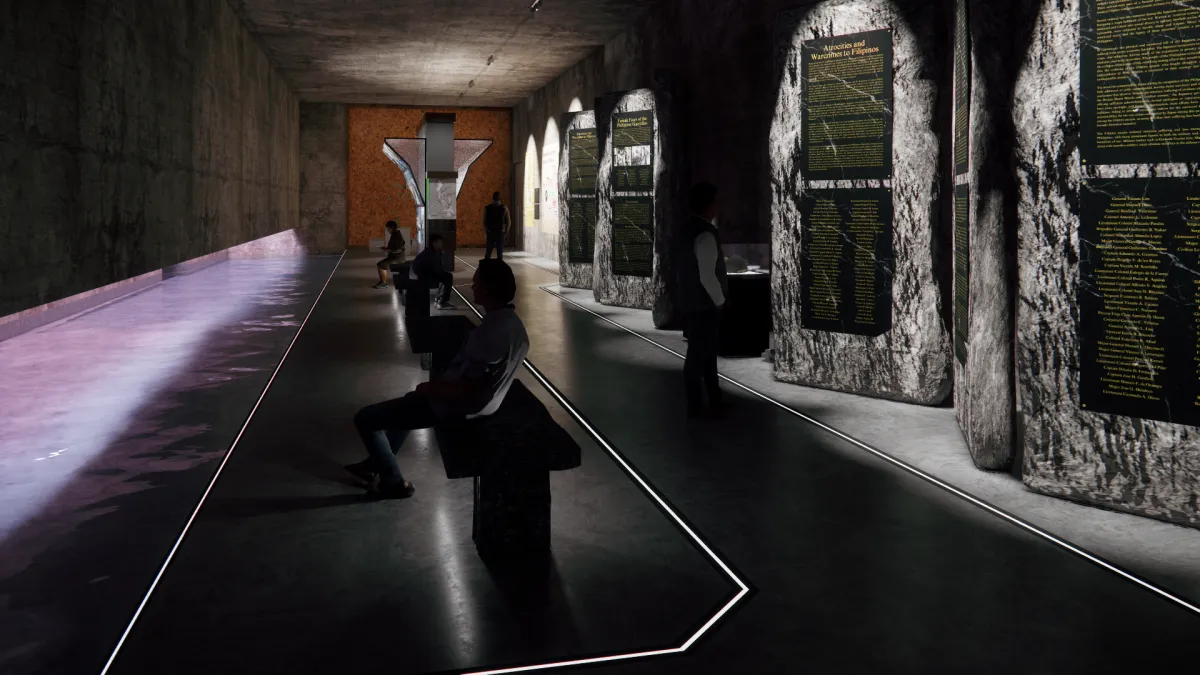
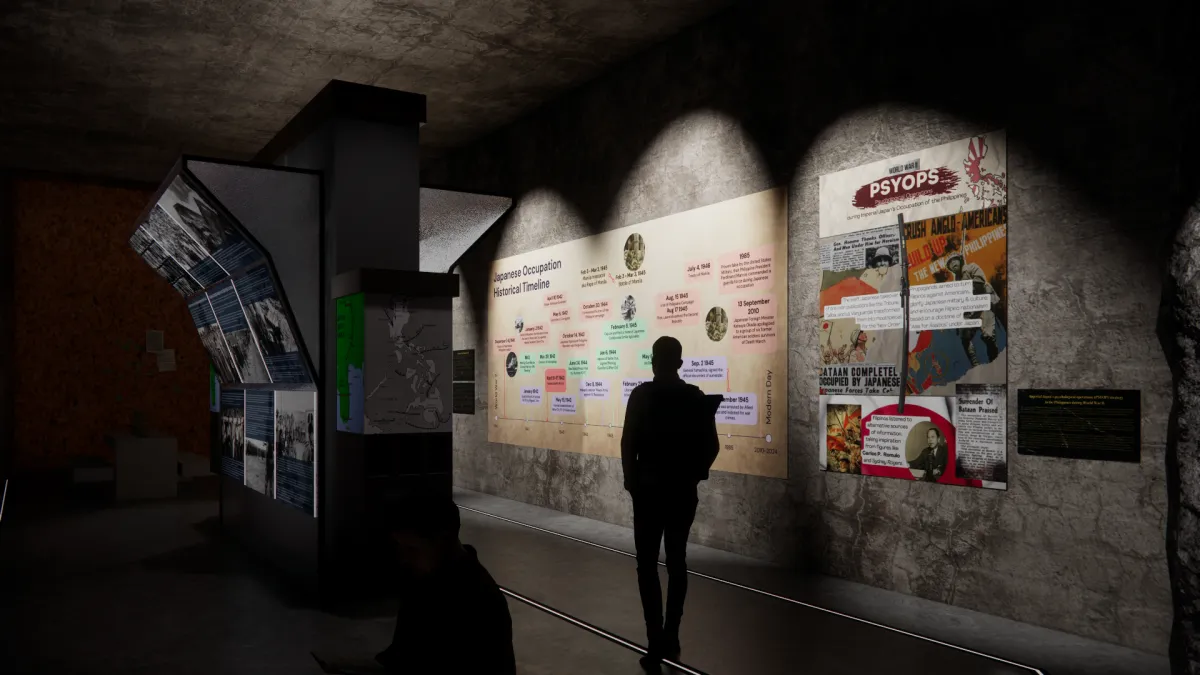
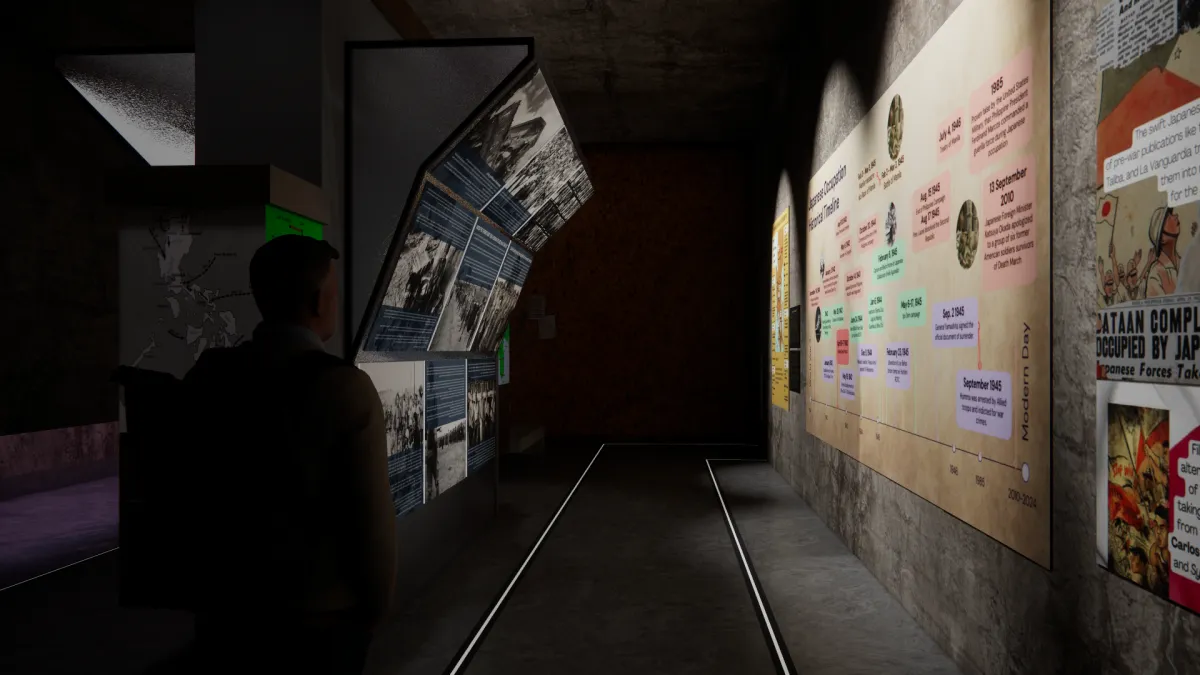
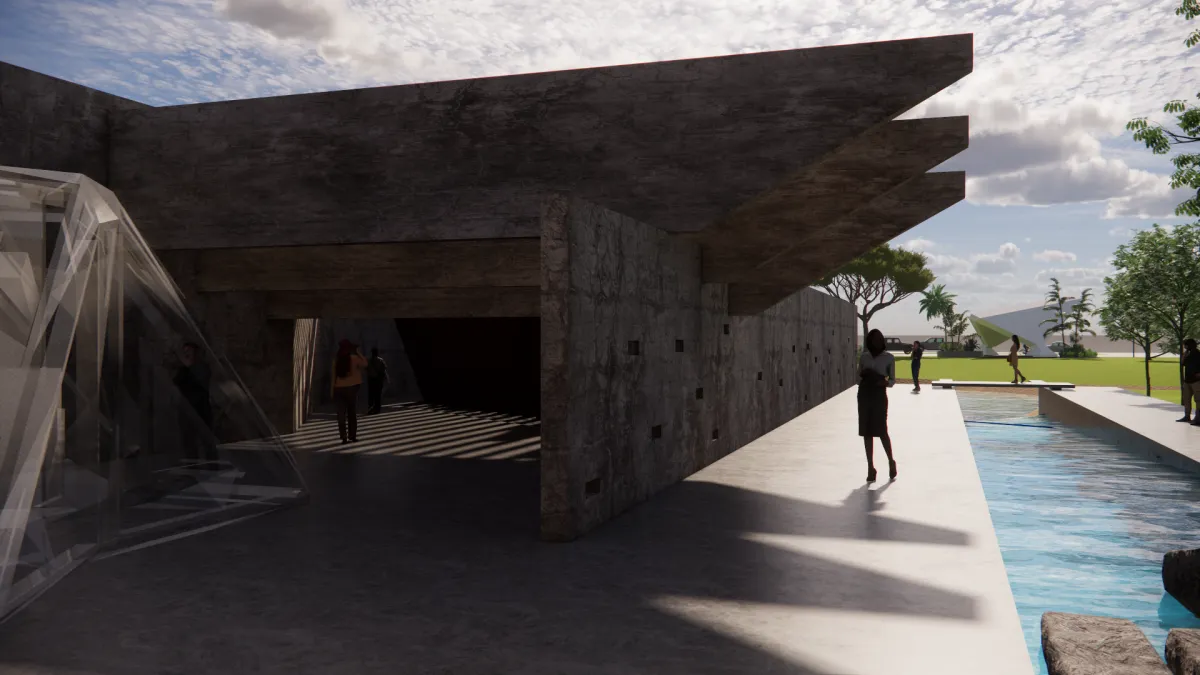
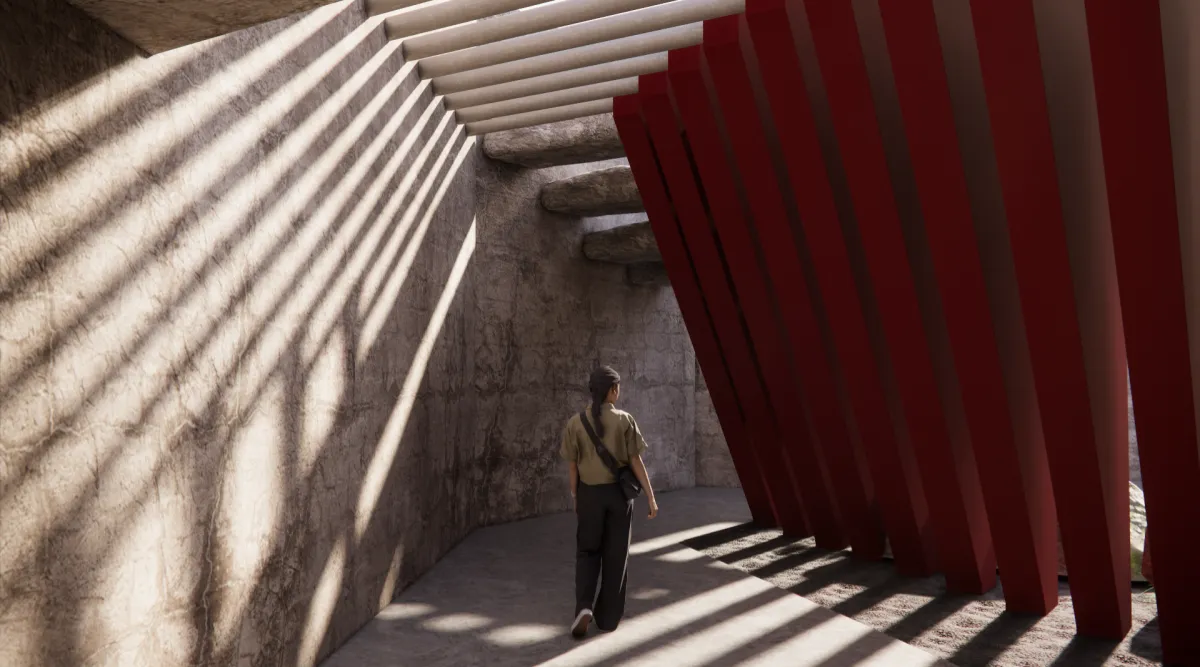
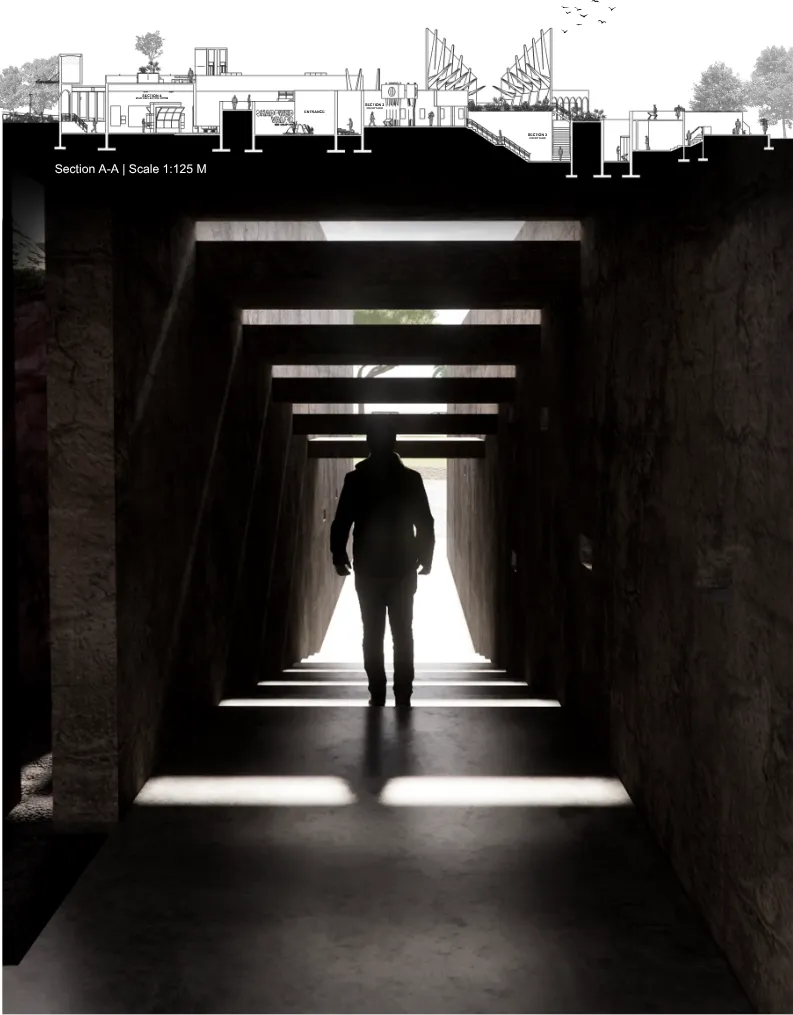
The fourth section focuses on the darkness as opposed to the natural light. As this part resembles a prison. Similar to how many freedom fighters at the time were imprisoned you would feel isolated, and promote self-reflection.
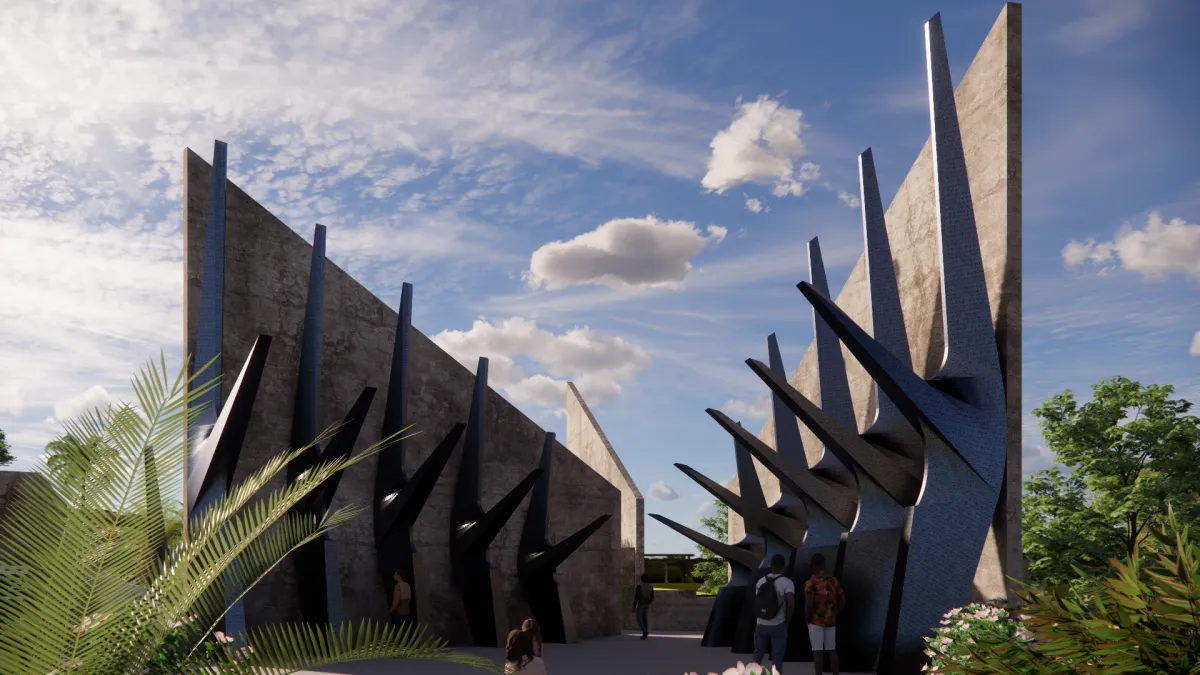
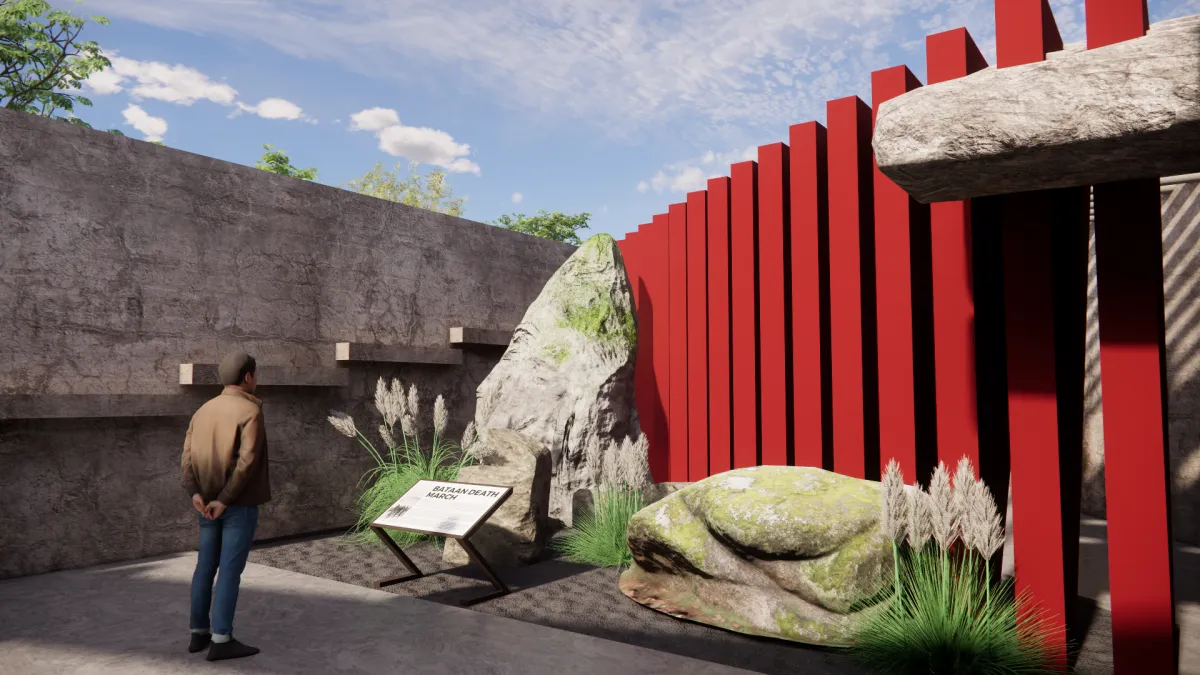
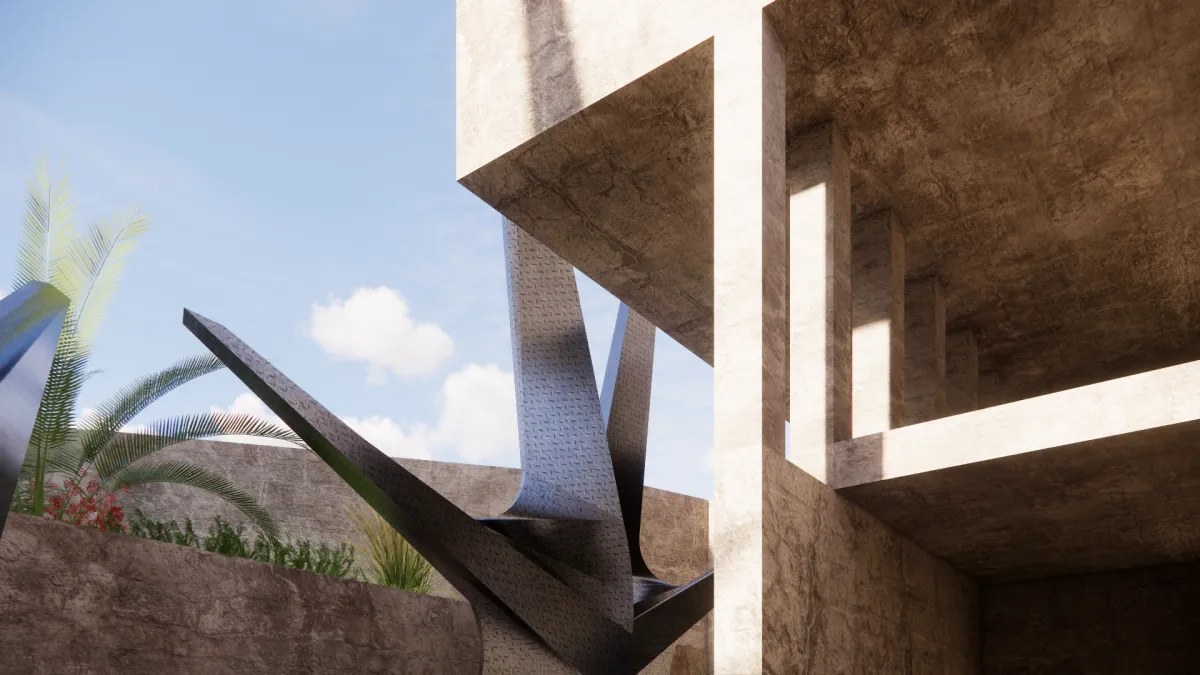
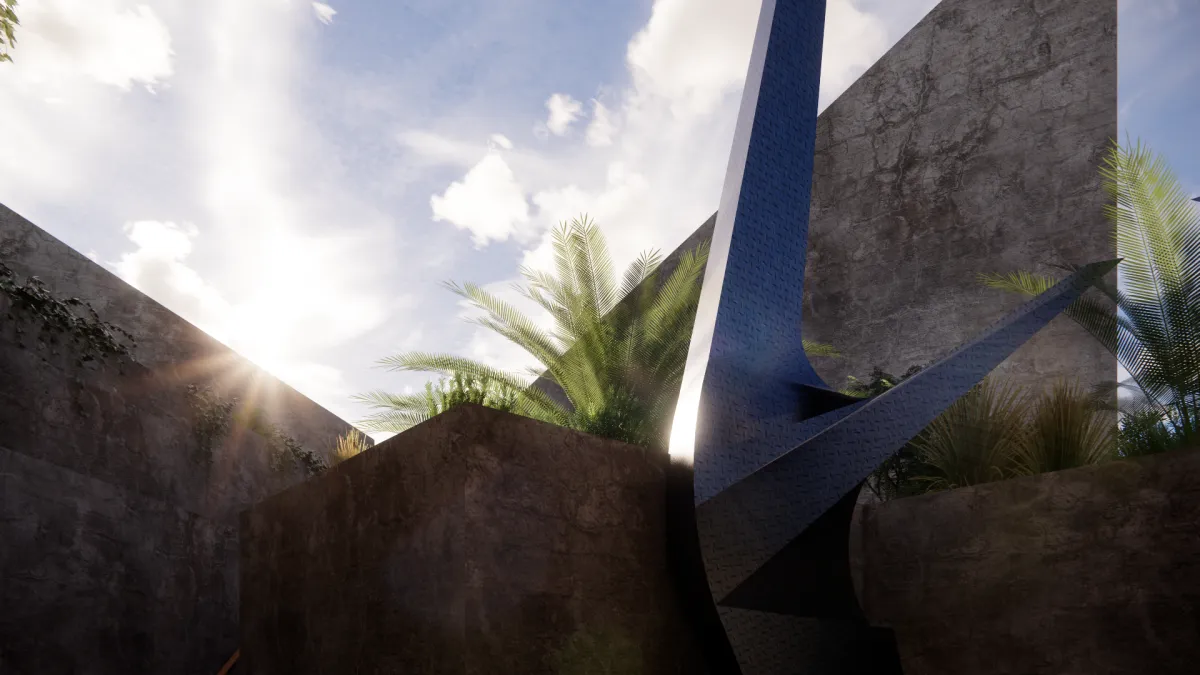
The forms leading up to it you will be greeted by its large rectangular and imposing form, it would feel heavier compared to other parts of the museum as it is the most solid form and is not open air, also the feeling of imprisonment is further accentuated by forms we recognize and associate with prison, which are small rectangular column-like structures holding up the ceiling slabs making it look like prison bars. The same metal forms in the monument can also be seen rising from the waters and reaching just a little above the walls, resembling people reaching for freedom from the prison in which is themselves, or in relation to history, the Japanese
A water feature connected to the water feature in the entrance allows light to be bounced off into the space giving people a glimmer of hope and also promote self-reflection.
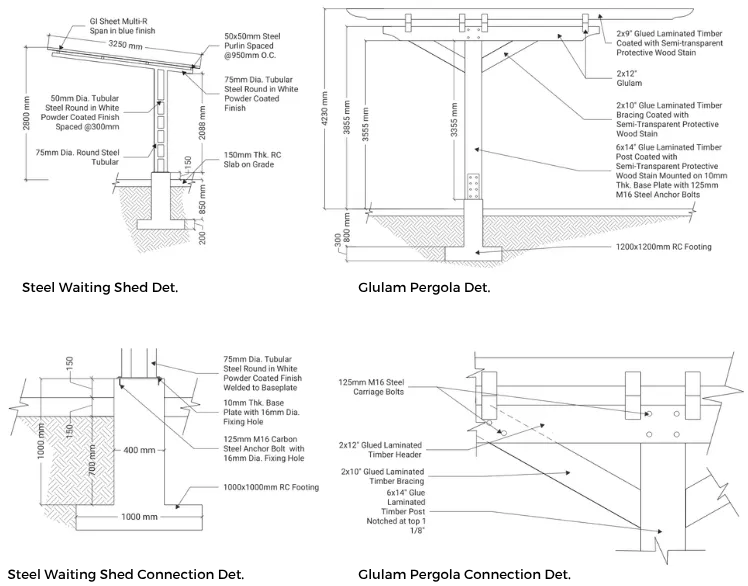
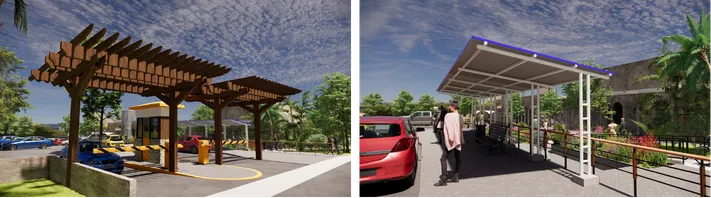
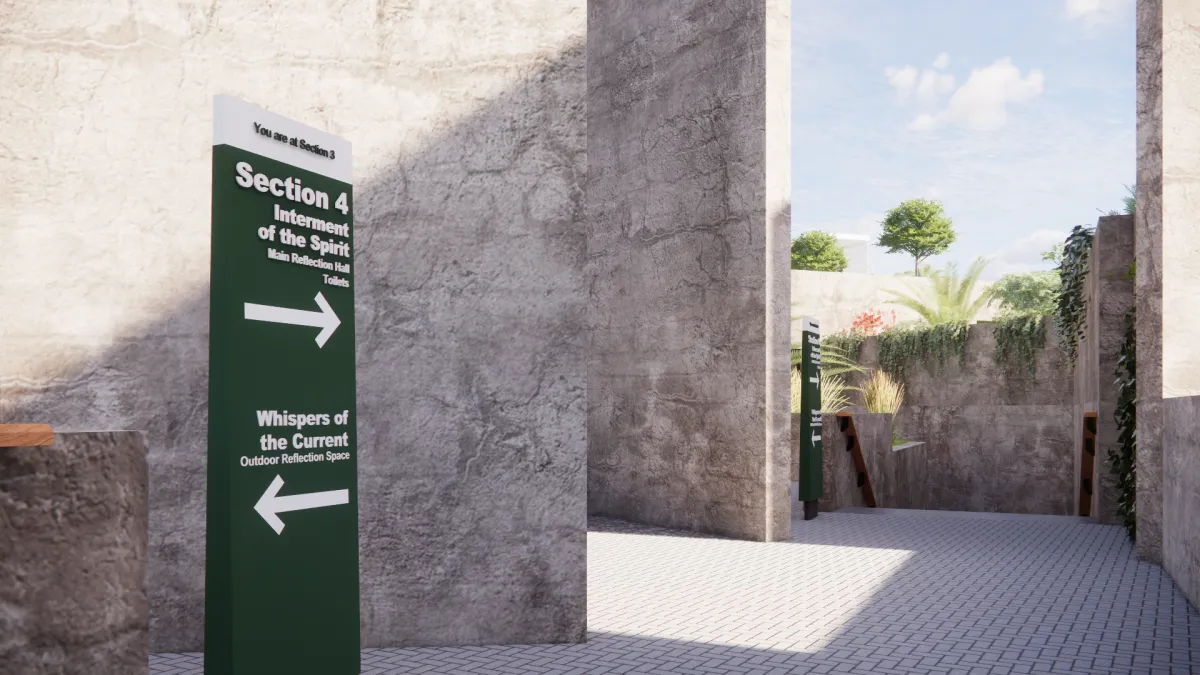
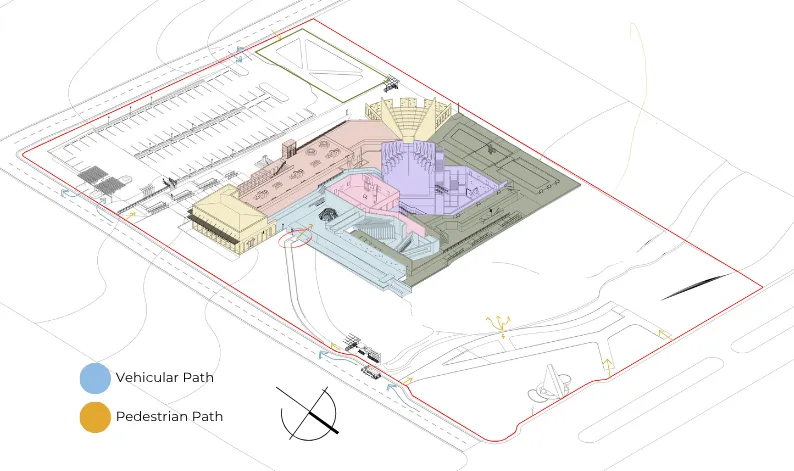
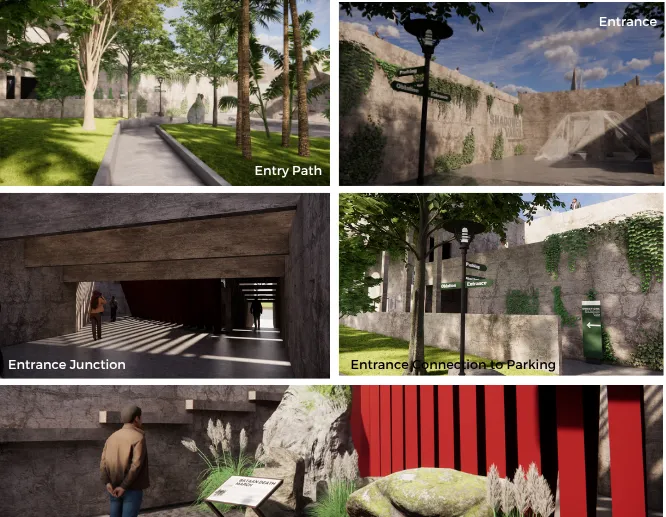
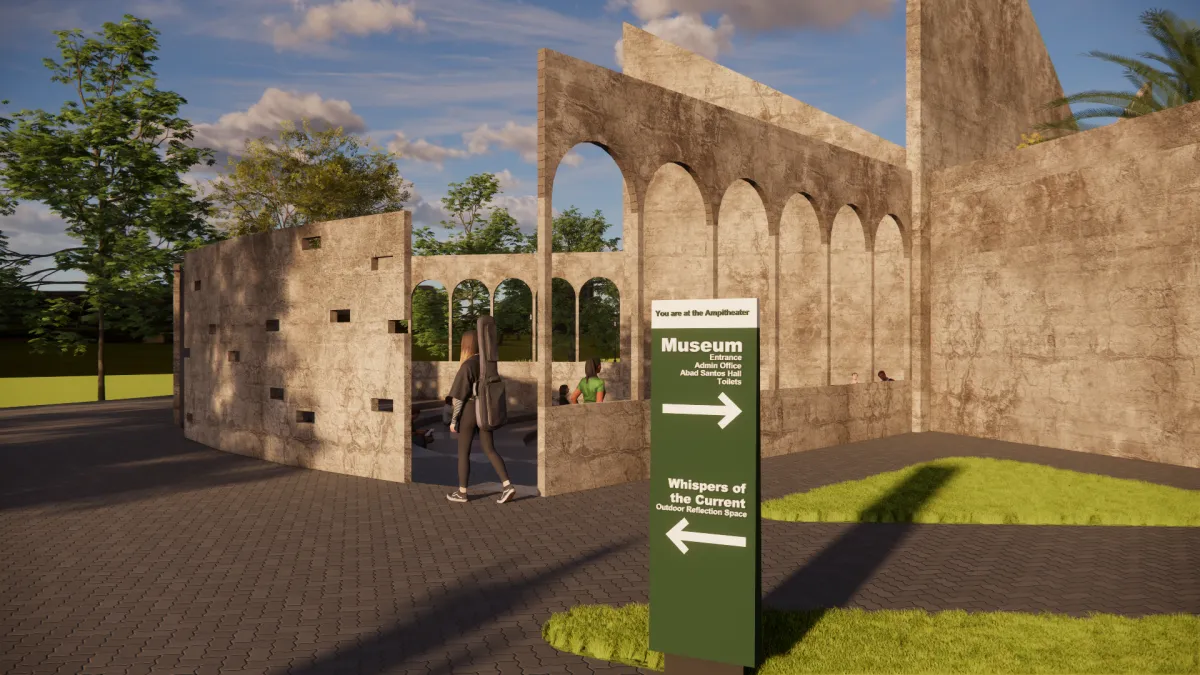
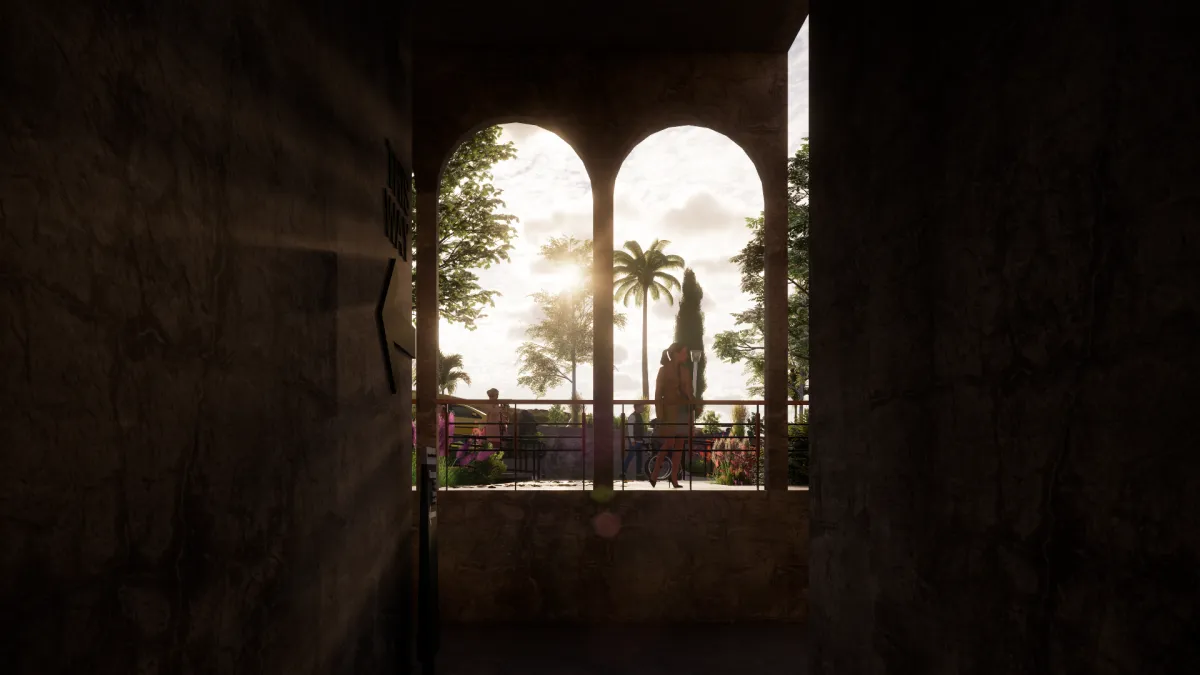
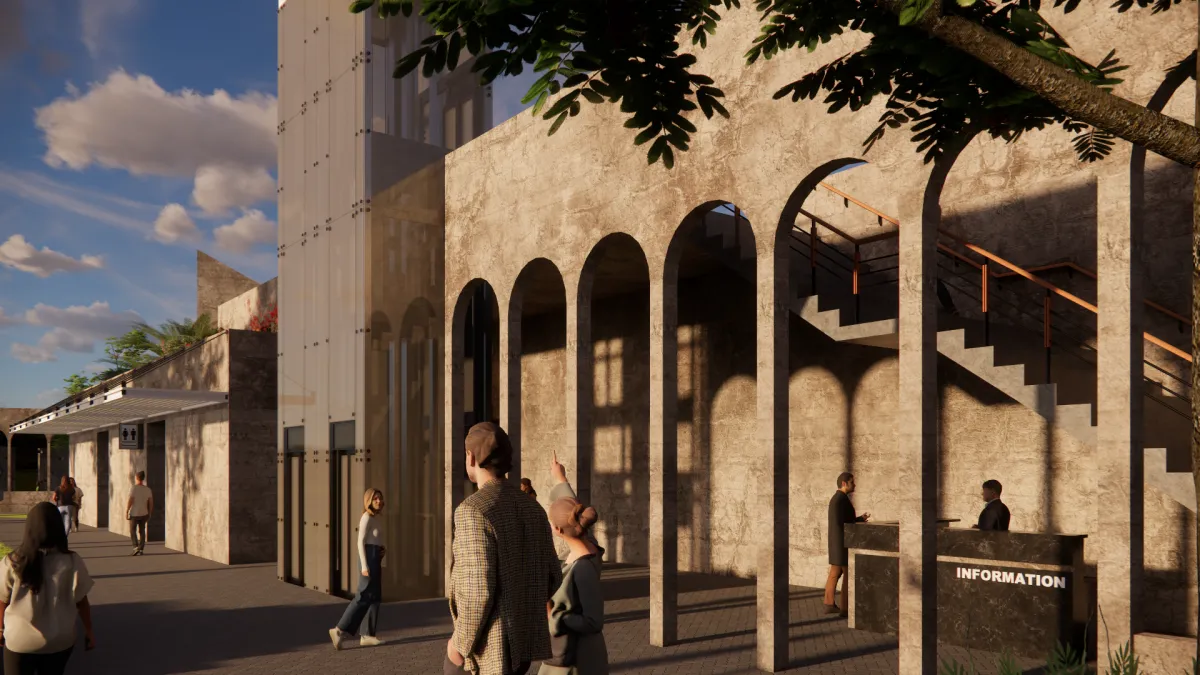
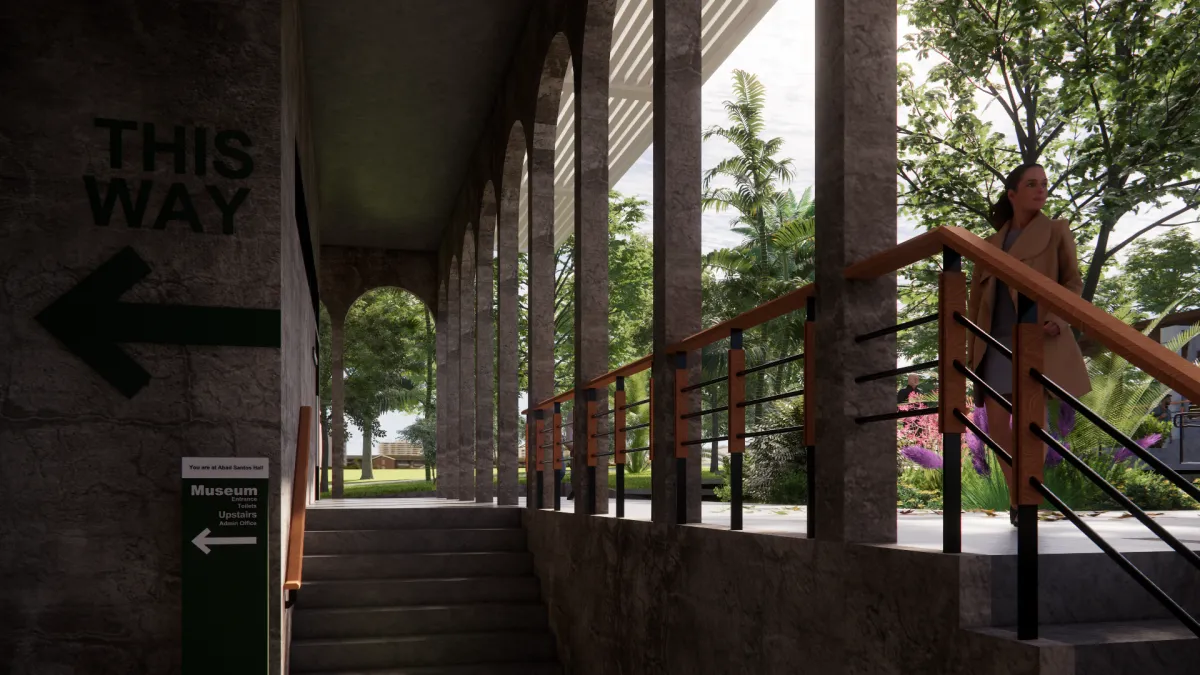
Even though the parking and the entrance are not directly in-front of one another this provides users a unique way of navigating SVMM they can be first introduced with the last section (the horizons) as explained on the previous board, or they can follow the directions of multiple navigational signs making it easy to navigate.
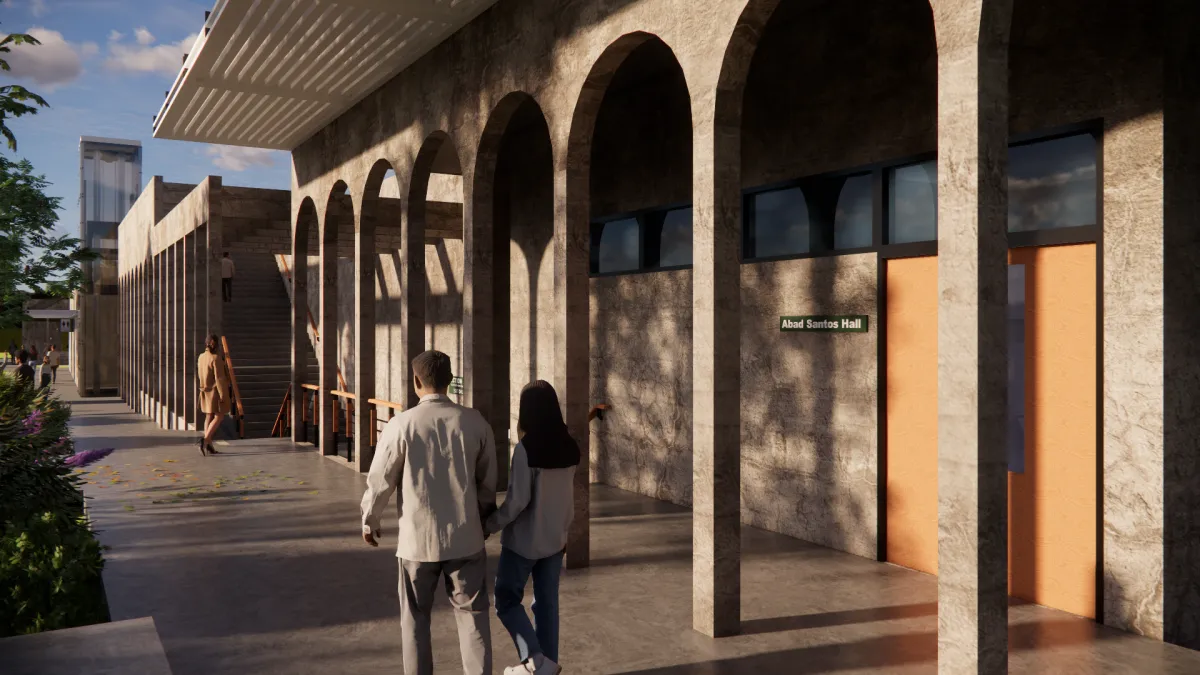
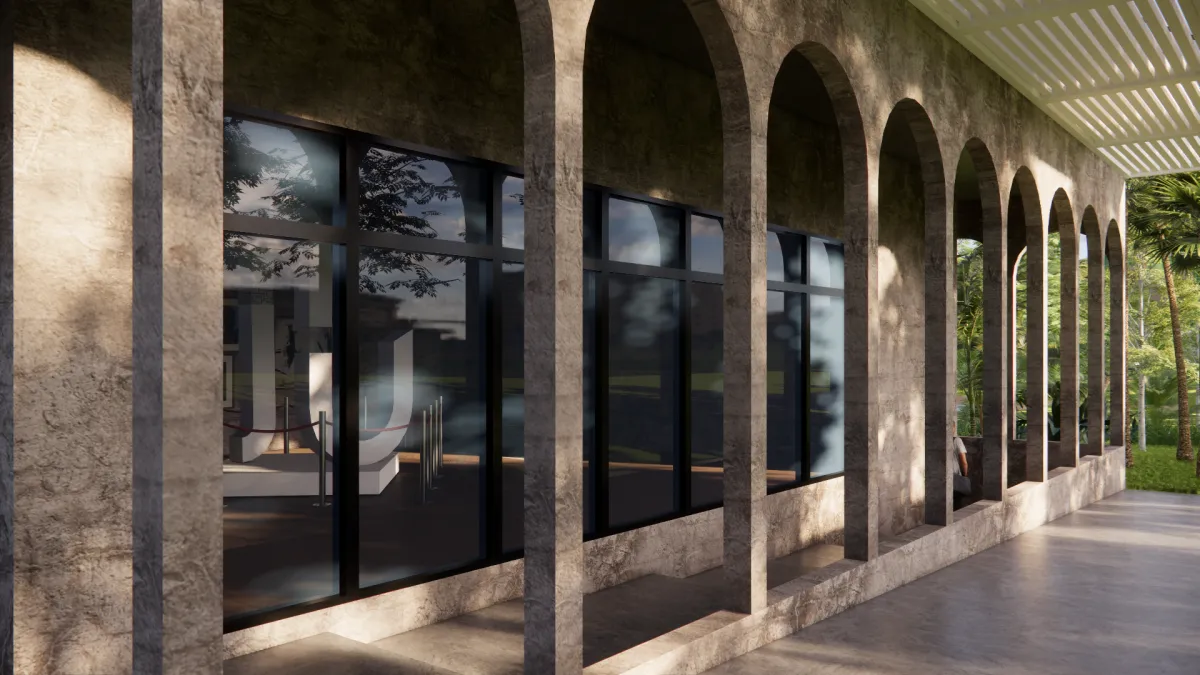
There is also a temporary exhibit area called Abad Santos Hall commemorating Jose Abad Santos who stayed here in the Philippines and acted as an acting president as the current president fled the country, he was later-on executed by the Japanese. This allows for a refreshing exhibit people can visit from time to time.
A amphitheater is also located within the site to host various events like lectures and talks about history, or other unrelated events. its sound is controlled with the tapering forms allowing for optimal acoustics of the reflection spaces.
Revolús Opera House
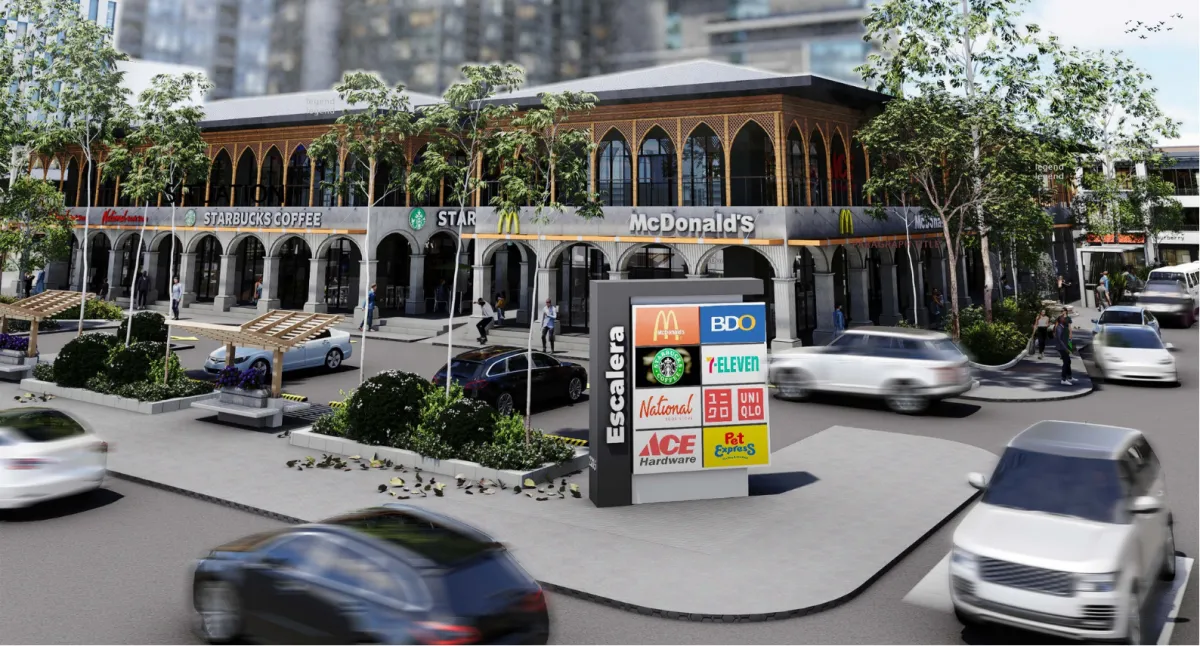
Escalera Strip Mall
FOLLOW ME


© 2026 Alec Tiu. All rights reserved.