
Revolús Opera House
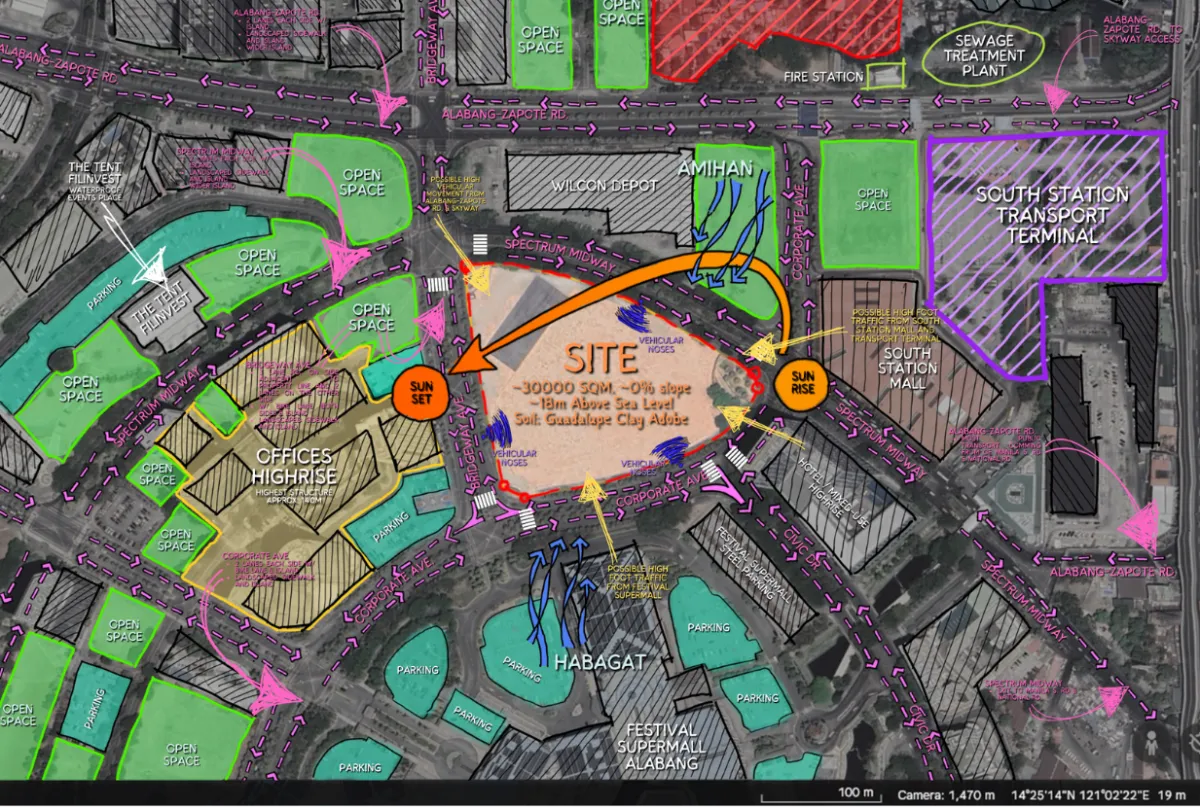
Location: Filinvest Event Grounds, Muntinlupa
Designed in: 4th Year 1st Semester | A.Y. 2024-2025
Softwares Used: Sketchup, AutoCAD, Enscape, Photoshop
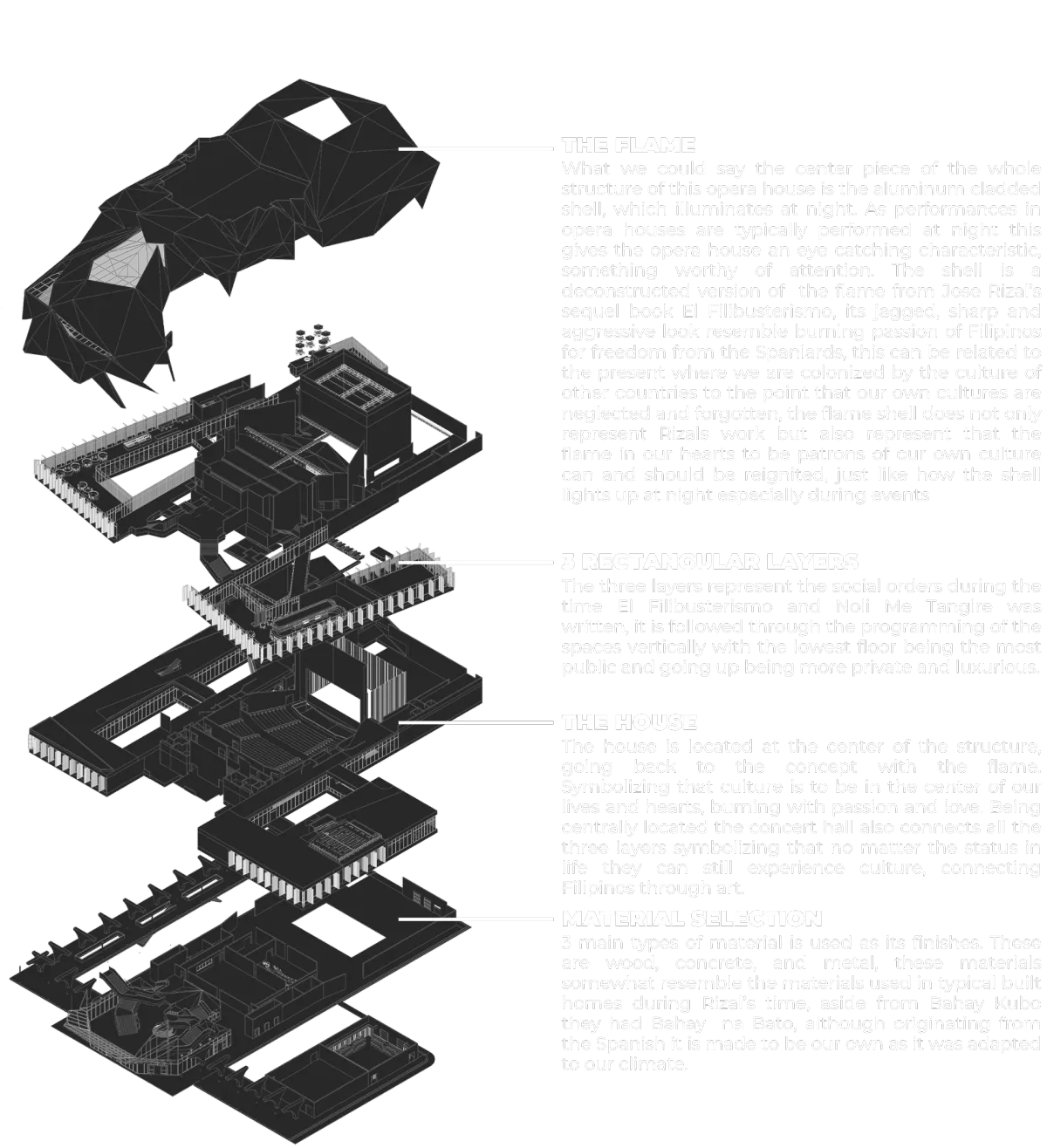
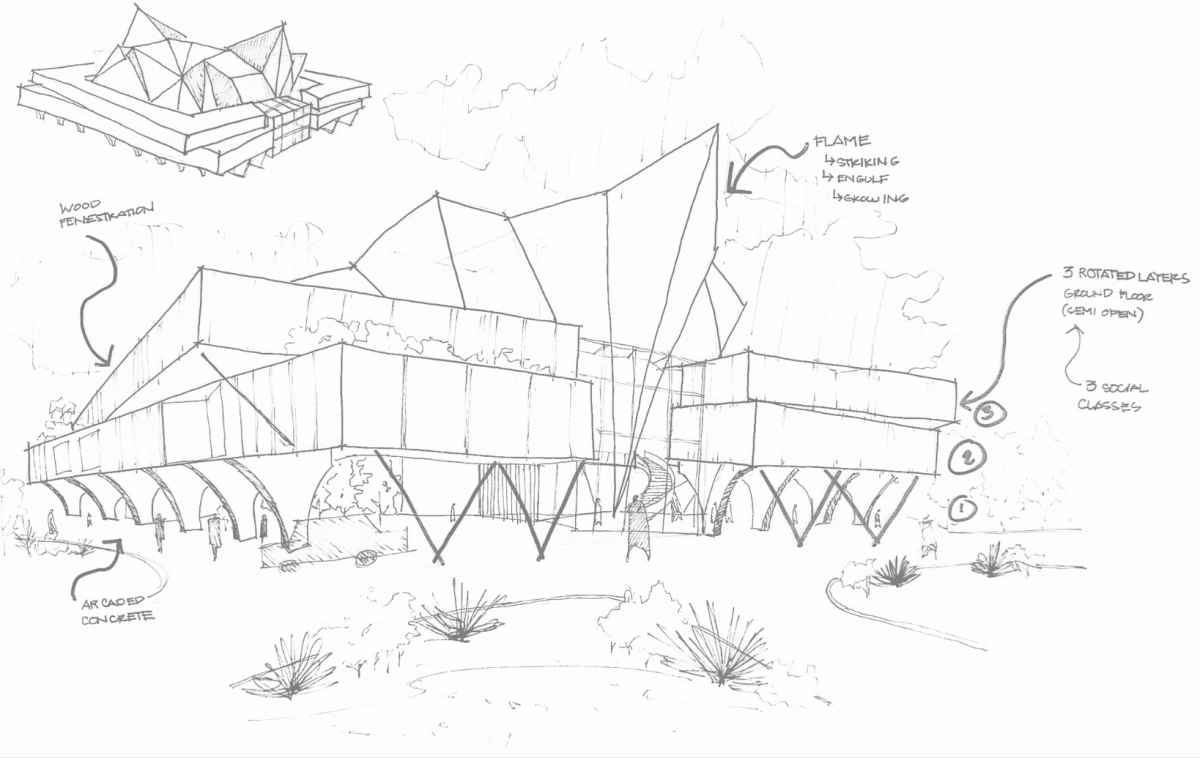
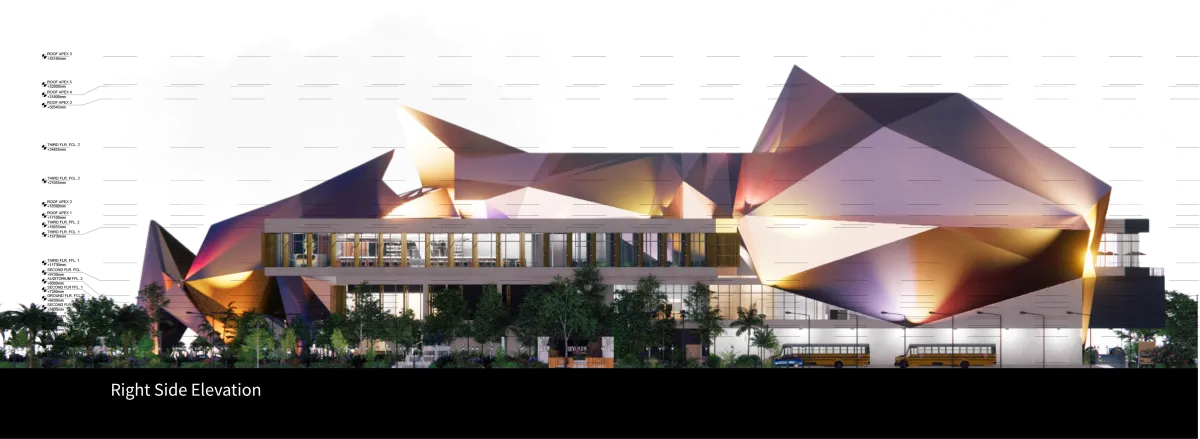
The Revolus opera house is inspired by the two books made by Jose Rizal namely El Filibusterismo and Noli Me Tangere. These two book scream Filipino pride when we hear the titles, and are truly iconic pieces of Philippine Literature. These two are also performed in Philippine Operas for as long as these were written. These books united and enlightened many Filipinos during the spaniard era and played a part in the Philippine Revolution, where despite us living in an archipelago having different cultures and beliefs we still united as one to protect our motherland and its people. The Opera House represents the connectedness and unity of Filipinos, our cultures, and beliefs, protecting it from colonizers and cultivating it.
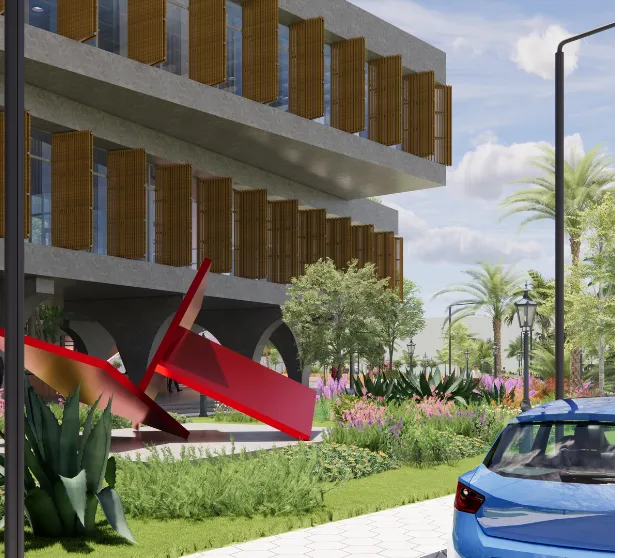
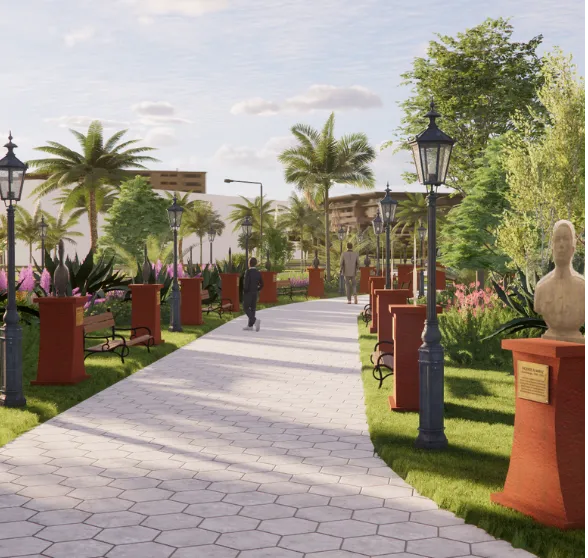
Art installations are frequently showcased throughout the opera house, this an sculpture by famous filipino artist, Arturo Luz named “Homage to Fernando Zobel” The Opera house aims to not only cultivate the music side of art but also other forms by showcasing them either permanently or temporarily. This is to help Filipino artists gain recognition and for those artists who are already known to be further appreciated as our art and culture is often underappreciated especially the concepts such as colonial mentality.

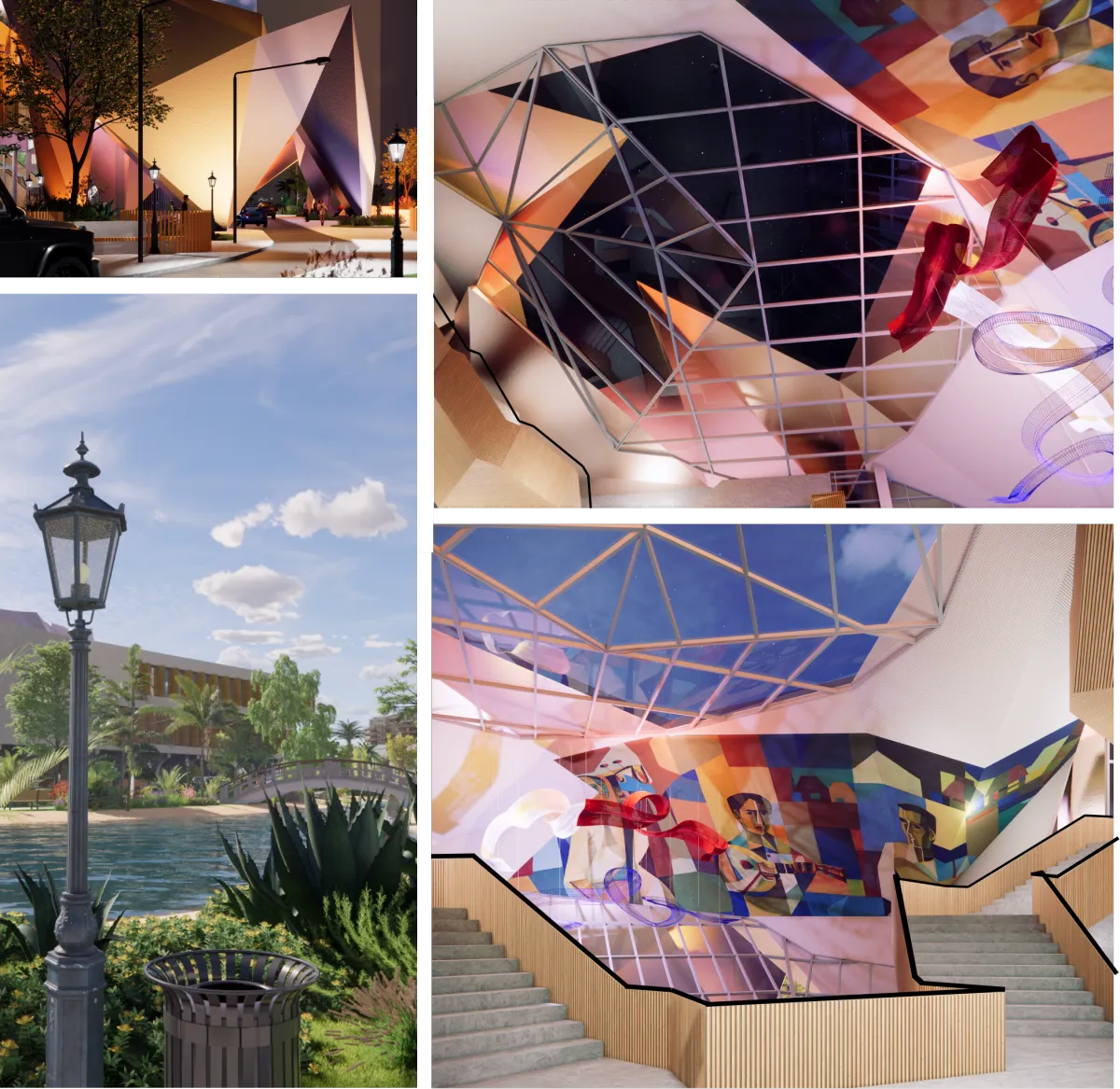
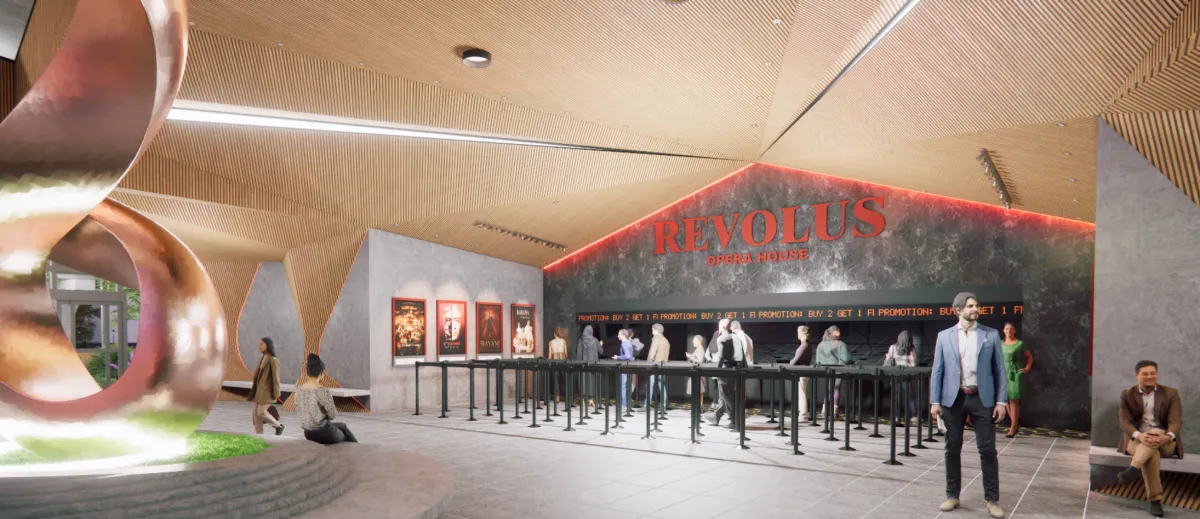
As you enter the drop-off area you are greeted with a large slanted curtain wall revealing the beautiful skylight and seeing the summit of the shell structure illuminated against the night sky, along side a intricately locally weaved hanging art installation with the colors of the Philippine flag, red, white and blue with it lit up by a warm yellow light representing the sun.
Just beside the hanging art installation is a an artwork by Vicente S. Manansala reinterpreted as a mural. This specific artwork is named Mga Manunugtog (Musicians) where the original is displayed in the national museum.
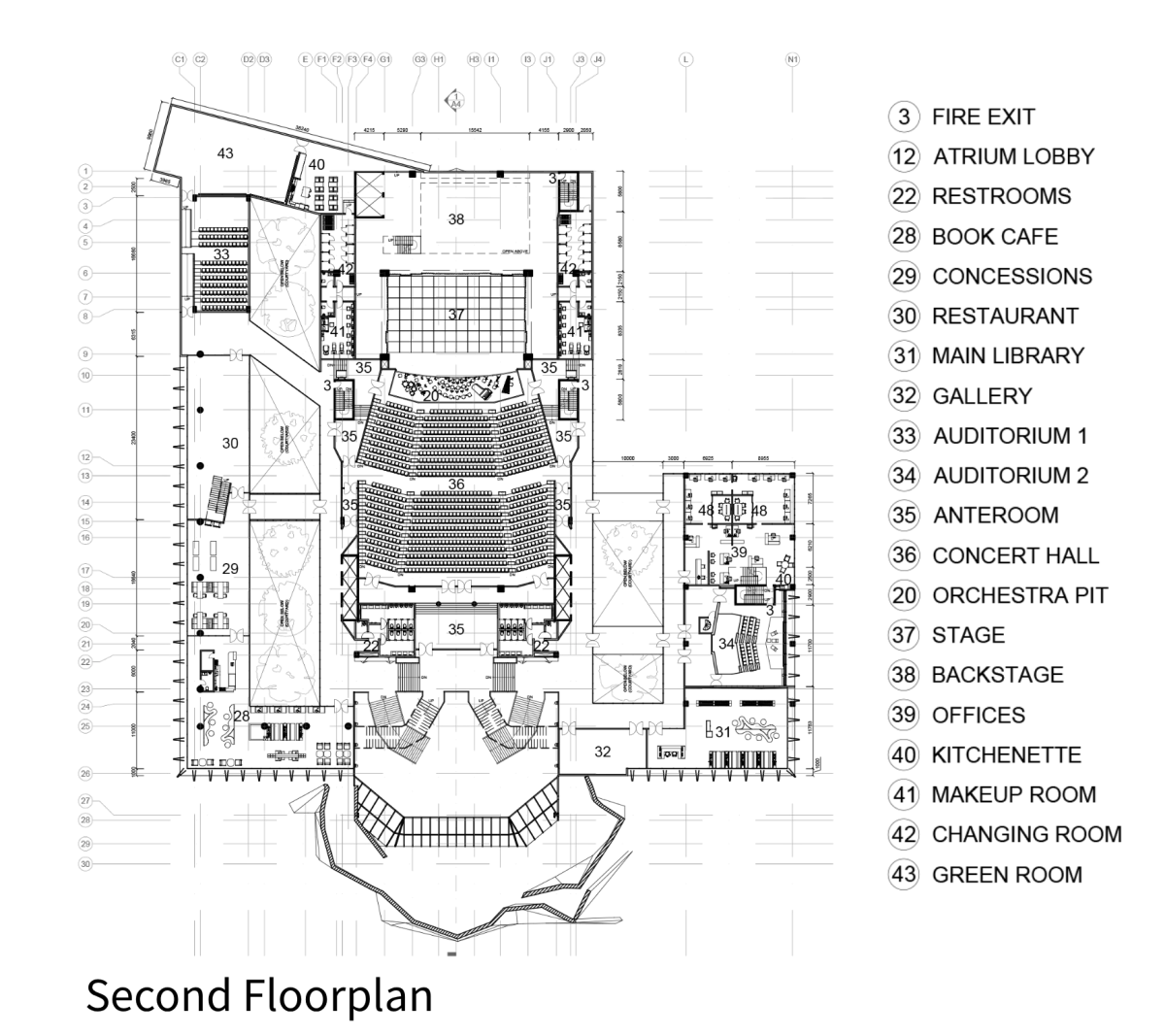
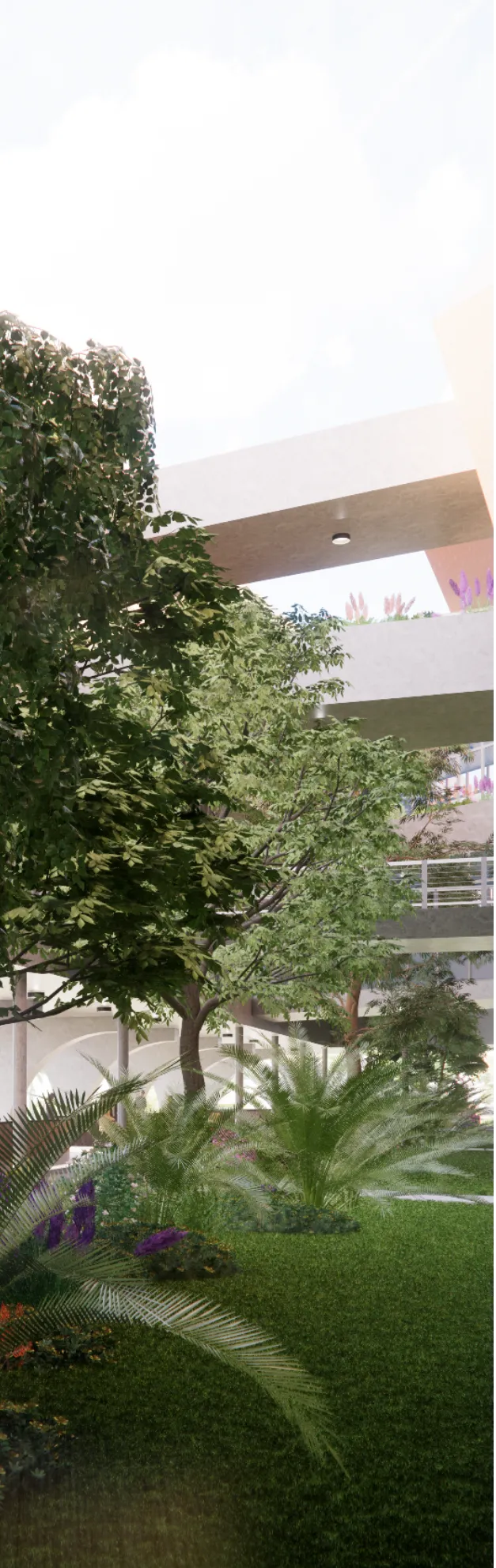
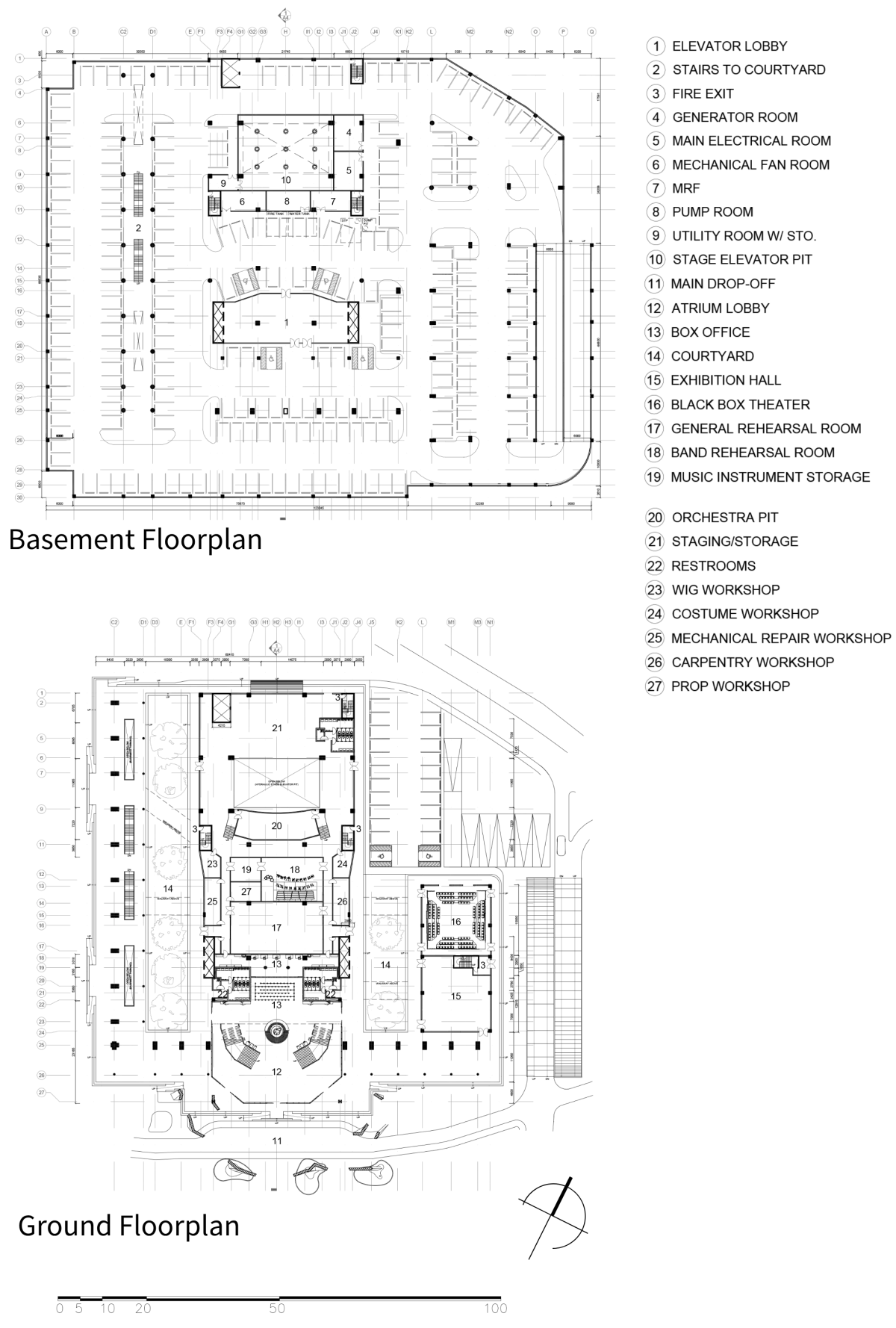
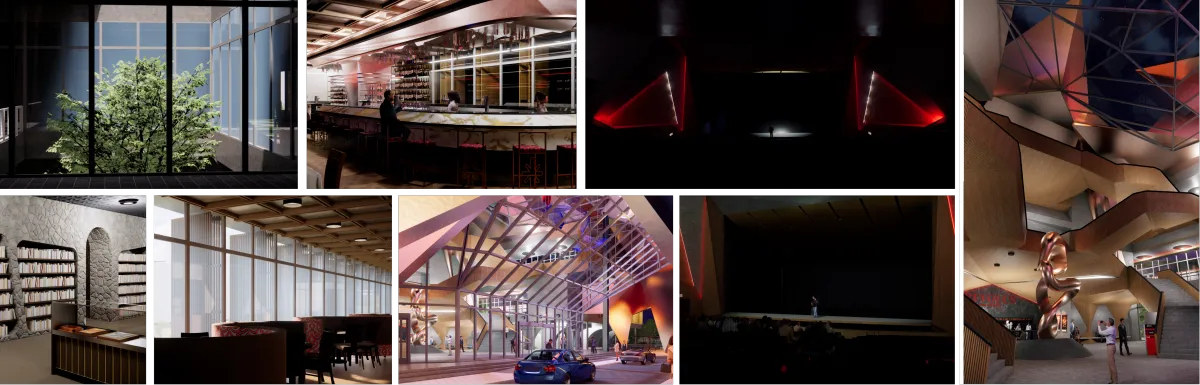
The Hallways of the Opera house fully utilizes light wells made by the Courtyard. The said courtyard and the hallways also serve as an airgap to optimize the acoustics of the Concert Hall. Air gaps such as corridors and the courtyard is a must, to isolate the noise generated from these facilities from the concert hall. Light is utilized to create hard and sharp shadows, together with the rough concrete juxtaposed with the softness of the landscaping in the courtyard. This contrast with shadows, textures and the form of the shell represents the tension felt by readers as they read El Filibusterismo. While the arcaded courtyard downstairs creating this light and air well both symbolizes the Spanish elite and through Rizal’s work there was hope and enlightenment. The concert hall houses around 1400 guests and the overall design of the concert hall and the proscenium is based on the combination of the exterior flame shell and the lighting of the box office.
Station 14 NAIA Transport Hub
Shadowed Valor Memorial Museum
FOLLOW ME


© 2026 Alec Tiu. All rights reserved.